 English
 Spanish
 Portuguese

Machu Picchu Location: Where Is Machu Picchu Located?
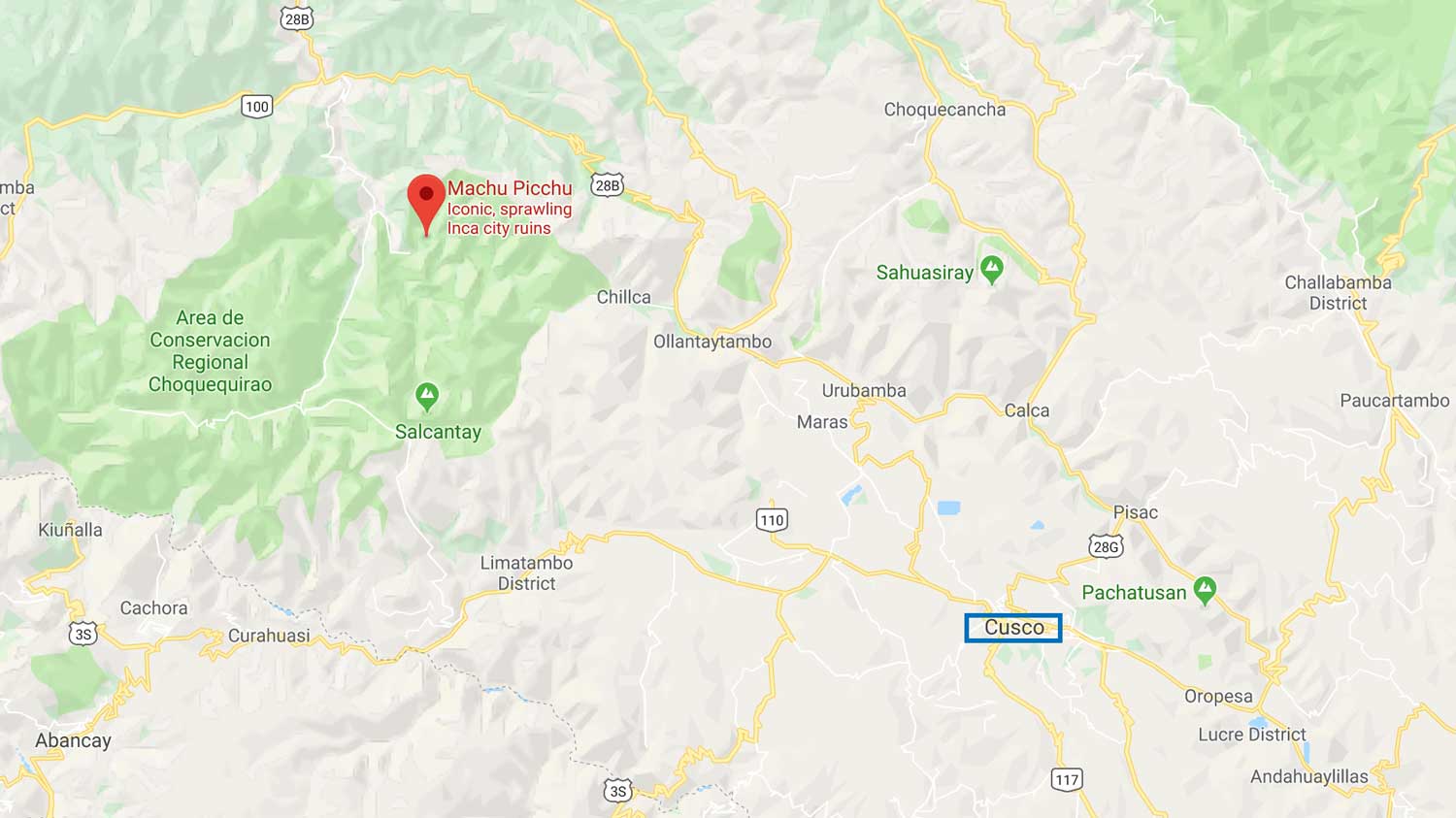
\Most people think that the location of Machu Picchu is just a few meters from the city of Cusco. This is understandable, as Cusco is the main gateway for travelers, but in reality, Machu Picchu is located in a remote and mountainous area of southern Peru, far from the city itself.
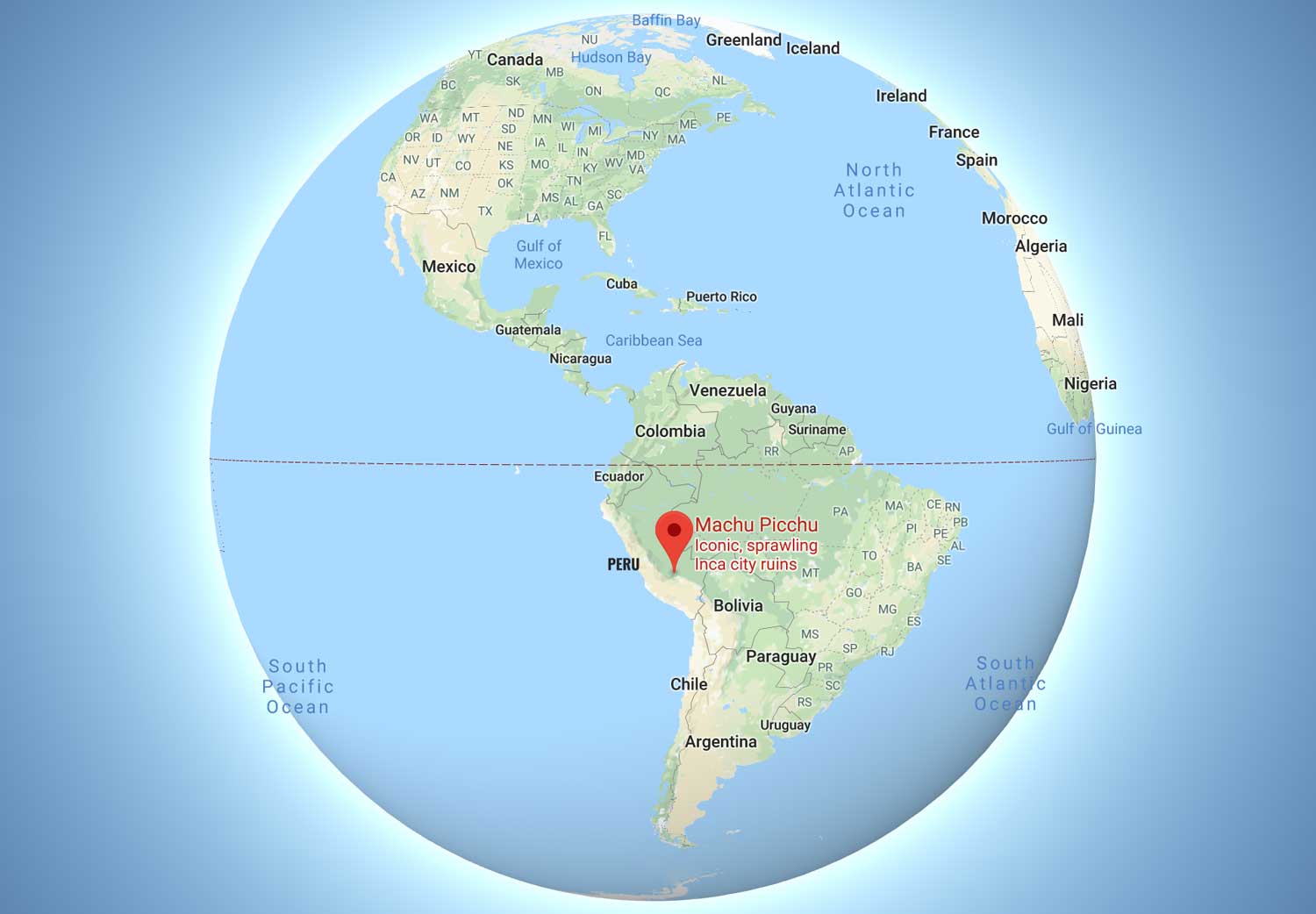
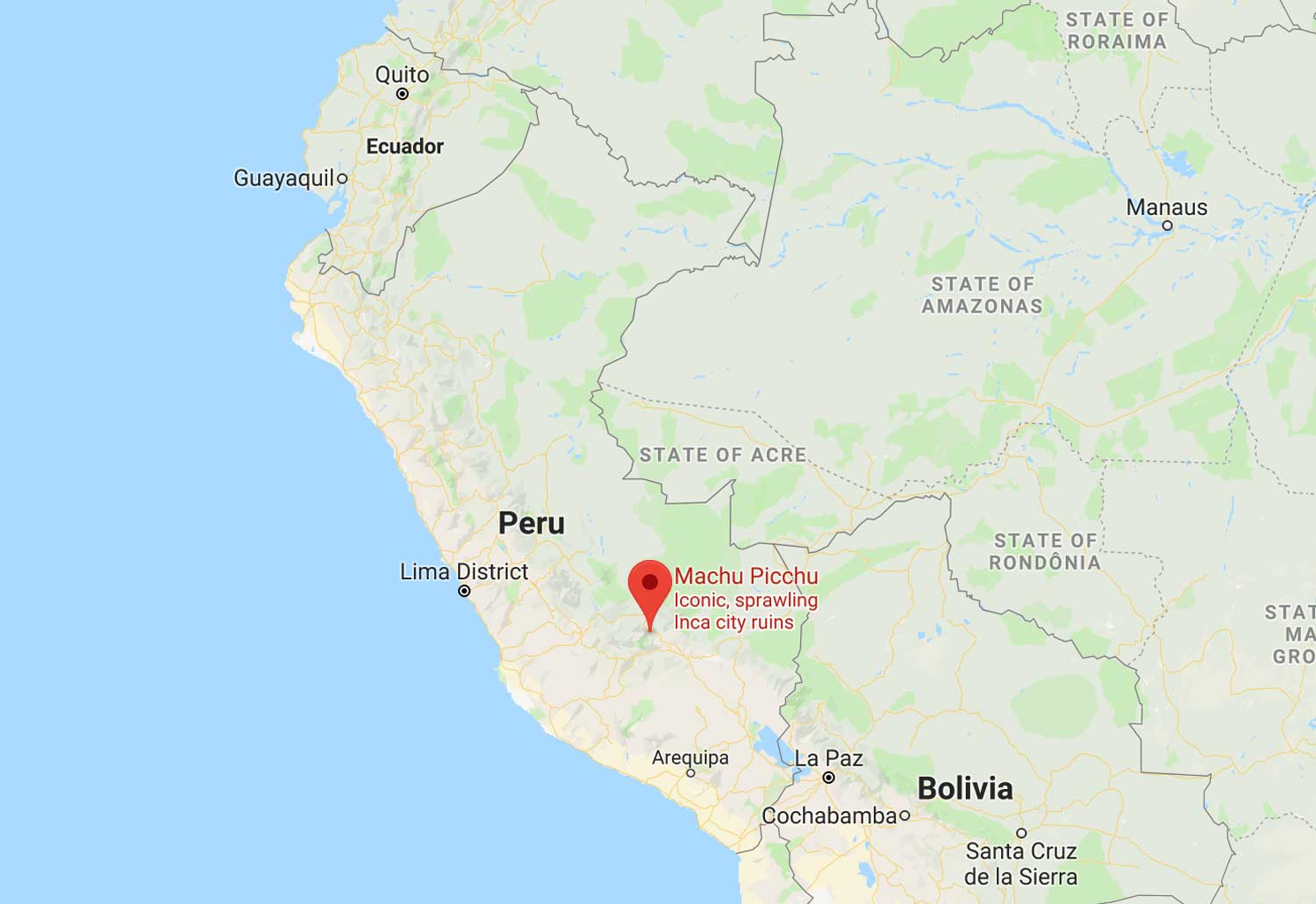
Machu Picchu Location in Peru
Machu Picchu is located in the Eastern Cordillera of southern Peru, on a mountain ridge at 2,430 meters (7,970 feet) above sea level. This unique location places the site high above the surrounding valleys and rivers, offering natural protection and dramatic scenery.
It is located in the Region of Cusco, Province of Urubamba, District of Machupicchu, within the Sacred Valley of the Incas, one of the most important cultural and historical regions of Peru.
Machu Picchu is approximately 80 kilometers (50 miles) northwest of Cusco, although the actual travel distance is longer due to the rugged Andean terrain.

Source: Wikipedia
Read more about Maps of Machu Picchu.
Geographic Setting and Natural Environment
Through this region flows the Urubamba River, which cuts through the Cordillera and creates a deep canyon with a tropical mountain climate. This river was vital to the Incas and continues to define the geography of the area today.
The surface of the Archaeological Park, including the urban and agricultural areas, covers a total of 32,592 hectares, making it one of the largest protected archaeological sites in South America.
Machu Picchu is located on the eastern slope of the Vilcabamba Mountain Range, bordering the Apurímac and Urubamba river basins, a zone known for its steep slopes, cloud forests, and rich biodiversity.
Exact Coordinates of Machu Picchu
Machu Picchu is located at 13° 9′ 47″ South latitude and 72° 32′ 44″ West longitude, in the province of Urubamba. These precise coordinates place the site in a transition zone between the high Andes and the Amazon basin.
The nearest main city is Cusco, the regional capital and ancient capital of the Incas, located approximately 130 kilometers away by land routes.
Mountains Surrounding Machu Picchu
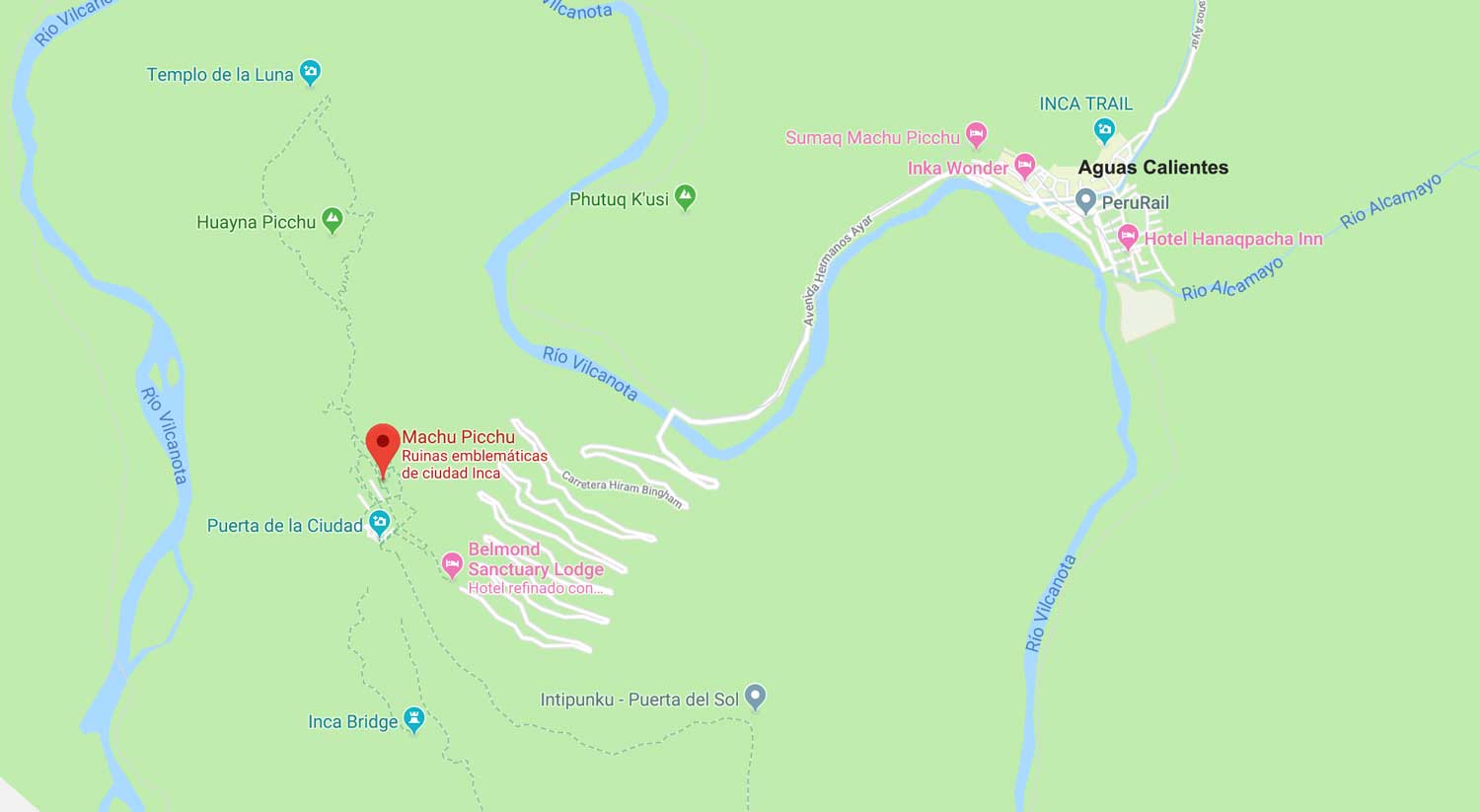
The mountains Machu Picchu and Huayna Picchu are part of a larger geological formation located in the Central Cordillera of the Peruvian Andes. The archaeological site sits on the left bank of the Urubamba Canyon, formerly known as Quebrada de Picchu.
At the foot of the hills flows the Vilcanota or Urubamba River. The Inca archaeological site is strategically positioned halfway between the peaks of two mountains, 450 meters above the valley and approximately 2,438 meters above sea level.
Machu Picchu Layout and Dimensions
The constructed surface of Machu Picchu is approximately 530 meters long by 200 meters wide, with 172 buildings in its urban area. These structures include temples, residences, agricultural terraces, and ceremonial spaces.
Biogeographically, Machu Picchu is located in the Peruvian Yungas ecoregion, a transitional area characterized by cloud forests, high humidity, and exceptional ecological diversity.
Protected Areas and Sanctuary Location
The Historic Sanctuary of Machu Picchu extends over an area of 32,592 hectares. The sanctuary protects numerous biological species in danger of extinction and includes several Inca settlements, with Machu Picchu considered the most important.
The location of Machu Picchu allows the sanctuary to contain ten inhabited areas and two different ecoregions, creating a unique combination of cultural heritage and natural conservation.
Among the most important ecosystems are:
- Andean grasslands
- High dwarf forests
- High forest or Yunga, including cloud forests and mountain eyebrow
This diversity of habitats has led to an extraordinary variety of flora and fauna, making the sanctuary one of the most biodiverse areas in Peru.
Climate Conditions at Machu Picchu
The climate at Machu Picchu is temperate throughout the year, with clear seasonal differences.
- Rainy season: November to March
- Dry and warmer season: April to October
The minimum annual temperature ranges between 8°C and 11.2°C. During June, July, and August, temperatures can drop below freezing, especially at night.
The maximum annual temperature varies between 20.4°C and 26.6°C, creating generally comfortable conditions for visitors, depending on the season.
Choosing a suitable season is recommended for visiting Machu Picchu.
Read more about Weather at Machu Piccchu.
Importance of Machu Picchu’s Location
Machu Picchu is home to the highest expression of Inca archaeological and architectural achievement. Its isolated location contributed to its preservation and mystery, making it the most visited and internationally recognized archaeological site in Peru.
Today, it is considered a tourist destination of the first order, attracting travelers, researchers, and historians from around the world.
Aguas Calientes: The Gateway Town
The capital of the district is Aguas Calientes, a small town that offers accommodation, restaurants, and services for tourists. It serves as the main recreational and logistical center for all travelers to Machu Picchu.
Aguas Calientes is also known for its hot springs, which are a popular attraction and a relaxing experience after visiting the archaeological site.
How to Get to Machu Picchu
How to get to Machu Picchu is an important question for visitors. We have a complete section where we explain in detail how to reach the site using different transportation options.
Read more about how to get to Machu Picchu from Cusco.