 English
 Spanish
 Portuguese
The train to Machu Picchu is one of the most spectacular rail journeys in the world. Winding through the Sacred Valley alongside the Urubamba River, passing through cloud forest and Inca ruins, the route from Ollantaytambo or Cusco to Aguas Calientes is not just transport — it is the start of the experience.
But navigating the options can be confusing. There are two competing train operators, seven service tiers between them, multiple departure stations, and a wide price range that runs from around $51 for a basic seat to over $460 for the Hiram Bingham luxury experience. This guide cuts through all of it.
Below you will find every train type, current 2026 prices, departure stations, schedules, booking instructions, and a direct comparison of Peru Rail vs Inca Rail — so you can choose the right option for your trip and budget.
Peru Rail vs Inca Rail: Your Two Options
The only way to reach Machu Picchu by train is through one of two private operators: Peru Rail and Inca Rail. Both run the same route (along the Urubamba River valley to Aguas Calientes), both offer multiple service classes from budget to luxury, and both require advance booking — especially in high season (May through October).
Peru Rail is the larger and older operator, running since 1999. It offers four service tiers and operates the only ultra-luxury train on the route, the Hiram Bingham. Peru Rail has more daily departures and slightly more route flexibility, including a Sacred Valley service that adds a stop in Urubamba.
Inca Rail launched in 2009 as a premium alternative and quickly built a strong reputation for modern, design-forward carriages. It offers four tiers and tends to be comparable in price to Peru Rail at each level, with some travelers preferring the aesthetic of Inca Rail’s mid-range 360° service.
Side-by-side comparison
| Peru Rail | Inca Rail | |
| Founded | 1999 | 2009 |
| Service tiers | 4 (Expedition, Vistadome, Vistadome Observatory, Hiram Bingham) | 4 (The Voyager, The 360°, First Class, The Private) |
| Price range | $51 – $465+ | $54 – $550+ |
| Departure stations | Poroy (Cusco), Ollantaytambo, Urubamba (Sacred Valley only) | Ollantaytambo only |
| Daily departures | ~15–20 | ~8–12 |
| Advance booking rec. | 60–90 days for peak season | 60–90 days for peak season |
| Official site | perurail.com | incarail.com |
The short answer on which to choose: at the budget level, Peru Rail’s Expedition is slightly cheaper than Inca Rail’s Voyager. In the mid-range, Inca Rail’s 360° train offers a more modern design experience than Peru Rail’s standard Vistadome. For luxury, Peru Rail’s Hiram Bingham is the iconic option. For most travelers on a standard trip, either operator at the Expedition or Vistadome level will be perfectly comfortable and enjoyable.
Every Train Class Explained: Prices, Features, and Who Each Is For
Budget tier: Peru Rail Expedition ($51–$75 one-way)

The Expedition is the most affordable way to reach Machu Picchu by train and the most popular option for independent budget travelers. Despite being the entry-level service, the carriages are comfortable and modern with reclining seats, panoramic windows, and a snack service on board. There is no waitlist service or entertainment, but the scenery is identical to every other train on the route.
- Journey time from Ollantaytambo: approximately 1 hour 40 minutes
- Journey time from Poroy (near Cusco): approximately 3 hours 30 minutes
- Luggage allowance: 5 kg per person in overhead compartments
- Onboard: snacks and drinks available for purchase
- Best for: budget travelers, backpackers, and those who prefer to spend money at the destination rather than on transport
Budget tier: Inca Rail The Voyager ($54–$63 one-way)
Inca Rail’s entry-level service offers similar comfort to the Expedition but departs only from Ollantaytambo. The Voyager carriages are slightly newer in design and the price difference versus Peru Rail’s Expedition is minimal. The choice between the two at this level largely comes down to schedule — book whichever has a departure time that fits your itinerary.
- Journey time from Ollantaytambo: approximately 1 hour 40 minutes
- Luggage allowance: 8 kg per person
- Onboard: light snacks and drinks for purchase
- Best for: budget travelers departing from Ollantaytambo
Mid-range: Peru Rail Vistadome ($75–$122 one-way)

The Vistadome upgrades the experience significantly with glass roof panels and larger panoramic windows that frame the Andean scenery on both sides and above. The seats are more spacious and the onboard service includes a more substantial food and beverage offering. Peru Rail also runs an onboard fashion show featuring traditional Andean textiles mid-journey, which is a love-it-or-hate-it addition.
- Glass ceiling panels and larger panoramic windows
- More spacious seating with improved legroom
- Onboard food and beverage service included
- Traditional Andean textile fashion show mid-journey
- Price premium over Expedition: approximately $20–$50 depending on route and season
- Best for: travelers wanting a more scenic experience without the full luxury price tag
Is the Vistadome worth the extra cost? Honestly, it depends on your priorities. The glass roof does make a real difference on the Ollantaytambo–Aguas Calientes stretch, which passes through the most dramatic section of the cloud forest. On the longer Poroy route, the Sacred Valley scenery in the first hour is visible from standard windows too. If you are only doing the trip once, the Vistadome upgrade is worth it.
Mid-range: Peru Rail Vistadome Observatory

A newer premium variant of the Vistadome, the Observatory features redesigned carriages with even larger panoramic windows, improved seating, and an elevated observation deck at the rear of the train. Prices sit between the standard Vistadome and the Hiram Bingham. Limited availability makes this one to book early.
- Enhanced panoramic windows and observation deck access
- Price range: approximately $120–$180 one-way
- Best for: photography enthusiasts and travelers wanting maximum scenic experience without full luxury pricing
Mid-range: Inca Rail The 360° ($77–$86 one-way)
The 360° is Inca Rail’s equivalent of the Vistadome and arguably the most design-forward mid-range option on the route. The carriages feature curved glass windows that extend up and over the seating area for a near-panoramic sky view. The onboard service includes a complimentary meal with Andean-fusion dishes, making it one of the best mid-range value propositions on the route.
- Curved glass ceiling providing near-360° views
- Complimentary meal service included in the ticket price
- Modern, boutique-hotel aesthetic in carriage design
- Departs from Ollantaytambo only
- Best for: travelers who want excellent mid-range value with complimentary food included
Premium and luxury: Sacred Valley, First Class, and private options
Peru Rail Sacred Valley: A specialized service that departs from Urubamba station (further into the Sacred Valley than Ollantaytambo) and includes a stop at Ollantaytambo, making it ideal for travelers who want to combine a Sacred Valley tour with their Machu Picchu journey in a single day. Priced in the $90–$140 range.
Inca Rail First Class ($120–$180): Inca Rail’s premium tier offers full table service, a chef-prepared three-course meal, premium bar service, and wider seats in a more intimate carriage. An excellent mid-luxury option that costs significantly less than the Hiram Bingham.
Inca Rail The Private ($400–$550+): A private charter option for groups or couples wanting an exclusive experience. Price varies by group size and configuration.
Ultra-luxury: Peru Rail Hiram Bingham ($460–$465 one-way)
The Hiram Bingham is in a different category entirely. Named after the American explorer who brought Machu Picchu to international attention in 1911, this Belmond-operated train is one of the iconic luxury rail experiences in South America. The service includes a full brunch on the outbound journey, cocktail hour upon arrival, afternoon tea, dinner on the return journey, an open bar throughout, live entertainment, and guided entrance to Machu Picchu.
- Full brunch (outbound) and dinner (return) with open bar
- Cocktail hour in Aguas Calientes and guided tour of Machu Picchu
- Afternoon tea on the return journey
- Beautifully restored 1920s-style Pullman carriages
- Departs Poroy station (near Cusco) only
- Best for: honeymoons, special occasions, travelers for whom the train journey is itself the main event
Note: The Hiram Bingham price includes the Machu Picchu entry ticket and guided tour, making the all-in cost closer to other luxury experiences than the headline price suggests. Still: it is expensive. For most travelers, a Vistadome or 360° ticket and a good guided tour package delivers 80% of the experience at 20% of the price.
2026 Train Prices at a Glance
Prices vary by season, departure time, and availability. The figures below represent approximate standard-season one-way fares per adult as of 2026. Peak season (May–October) and holiday periods command premium prices, so booking early is essential.
| Train / Service | Operator | Route | Price (one-way) | Includes food? |
| Expedition | Peru Rail | OLL / Poroy | $51 – $75 | Snacks (purchase) |
| The Voyager | Inca Rail | Ollantaytambo | $54 – $63 | Snacks (purchase) |
| Vistadome | Peru Rail | OLL / Poroy | $75 – $122 | Onboard service |
| The 360° | Inca Rail | Ollantaytambo | $77 – $86 | Meal included |
| Vistadome Observatory | Peru Rail | OLL / Poroy | $120 – $180 | Onboard service |
| Sacred Valley | Peru Rail | Urubamba / OLL | $90 – $140 | Onboard service |
| First Class | Inca Rail | Ollantaytambo | $120 – $180 | 3-course meal |
| The Private | Inca Rail | Ollantaytambo | $400 – $550+ | Full dining |
| Hiram Bingham | Peru Rail | Poroy (Cusco) | $460 – $465 | Full dining + bar |
OLL = Ollantaytambo station. Prices are per adult, one-way, approximate 2026 standard season. Check perurail.com and incarail.com for current pricing and availability.
Children’s discount policies
Both operators offer discounts for children on most train classes:
- Children under 3 years: free (no seat assigned)
- Children aged 3–11: approximately 50% discount on most services
- Children aged 12+: full adult fare
- Hiram Bingham: children’s pricing varies, contact operator directly
Always verify current children’s policies directly with the operator at time of booking, as these can change seasonally.
Stations, Routes, and Journey Times
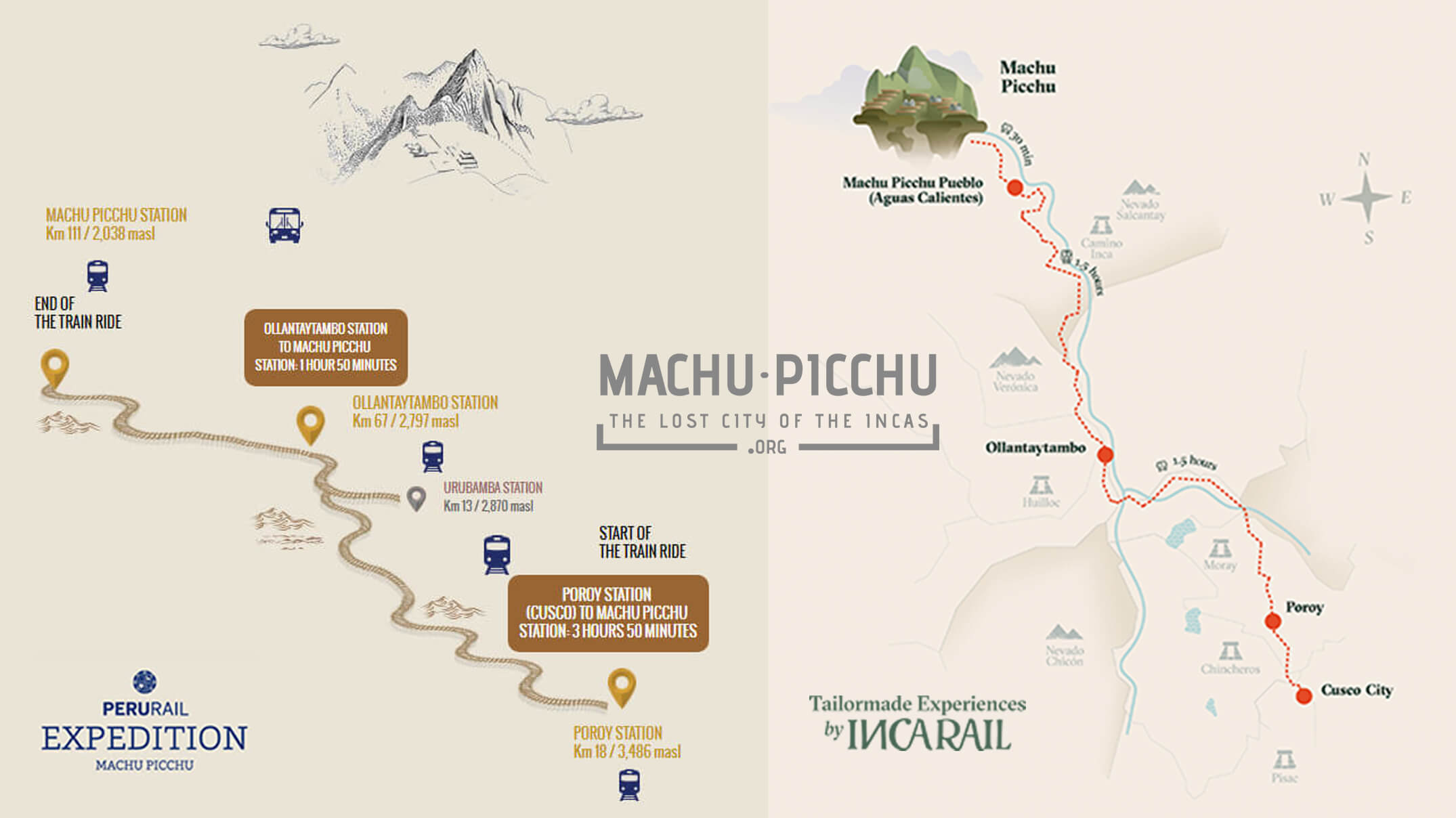
The train to Machu Picchu terminates at Aguas Calientes (also called Machu Picchu Pueblo), the town at the base of the mountain. From there, a shuttle bus runs 25 minutes up to the citadel entrance. The train does not go to Machu Picchu itself.
There are three main departure points, each suited to a different travel plan:
Ollantaytambo station — the most popular choice
Ollantaytambo is where the vast majority of travelers board, and for good reason. It is well-connected to Cusco by road (about 1.5–2 hours by private transfer or bus), sits in the heart of the Sacred Valley alongside an impressive Inca fortress, and both Peru Rail and Inca Rail depart from here. Journey time to Aguas Calientes is approximately 1 hour 35–1 hour 45 minutes.
The typical day looks like this: morning departure from Cusco by private transfer (worth including in your itinerary to stop at the Ollantaytambo ruins or other Sacred Valley sites), catch a mid-morning train to Aguas Calientes, afternoon in Machu Picchu, and return by late afternoon or evening train.
Poroy station — the scenic full route from Cusco
Poroy is located about 20 minutes outside Cusco by taxi and serves as the Cusco-area departure point for Peru Rail’s longer services. The journey takes approximately 3 hours 30 minutes to Aguas Calientes and covers the full Sacred Valley descent from the highlands into the cloud forest, offering spectacular altitude-change scenery. The Hiram Bingham departs exclusively from Poroy.
The downside: this longer route means an earlier start or a later return to Cusco, compressing time at the site. Most travelers doing a day trip opt for Ollantaytambo. Poroy is ideal for those spending a night in Aguas Calientes or on the luxury Hiram Bingham experience.
Note: Poroy station is typically closed from January through April during the rainy season due to landslide risk. During those months, Ollantaytambo becomes the only departure point for both operators.
Urubamba station — Sacred Valley service
Peru Rail’s Sacred Valley train departs from Urubamba, further into the Sacred Valley than Ollantaytambo. This service is designed for travelers combining a Sacred Valley tour with their Machu Picchu visit and stops at Ollantaytambo along the way. It is not the route for a straightforward Cusco–Machu Picchu journey but suits self-organized multi-day Sacred Valley itineraries.
The budget alternative: the Hidroelectrica route
There is a third way to reach Aguas Calientes that avoids both major train operators entirely: the Hidroelectrica route. This involves taking a bus or shared van from Cusco to Santa Maria, transferring to another vehicle to Santa Teresa, and then walking or taking another bus to Hidroelectrica station, where a short local train or a 2-hour walk along the tracks reaches Aguas Calientes.
The Hidroelectrica option is used almost exclusively by backpackers and budget travelers willing to invest 8–10 hours in transport to save $40–60 on a train ticket. It is not comfortable, it is not fast, and it involves multiple transfers. The one genuine benefit is the Santa Teresa hot springs, which make for a good overnight stop on the way. For most travelers, the time and hassle cost outweighs the savings.
Departure station summary
| Station | Operators | Journey Time | Rainy Season | Best For |
| Ollantaytambo | Peru Rail + Inca Rail | ~1h 40m | Open | Most travelers |
| Poroy (Cusco) | Peru Rail only | ~3h 30m | Closed Jan–Apr | Luxury, full route |
| Urubamba | Peru Rail only | ~2h 30m | Check schedule | Sacred Valley tours |
How to Book Train Tickets to Machu Picchu
Both Peru Rail and Inca Rail allow online booking through their official websites. There is no booking fee for direct purchase. The process is straightforward but benefits from some preparation.
Step-by-step: booking through Peru Rail (perurail.com)
- Go to perurail.com and select Machu Picchu routes from the main menu.
- Enter your departure station, travel date, and number of passengers.
- Select your preferred train class and departure time from the available options.
- Enter passenger details (passport number required for each passenger).
- Pay by credit card and download or print your e-ticket.
- Present your e-ticket (digital or printed) and passport at the station on departure day.
Step-by-step: booking through Inca Rail (incarail.com)
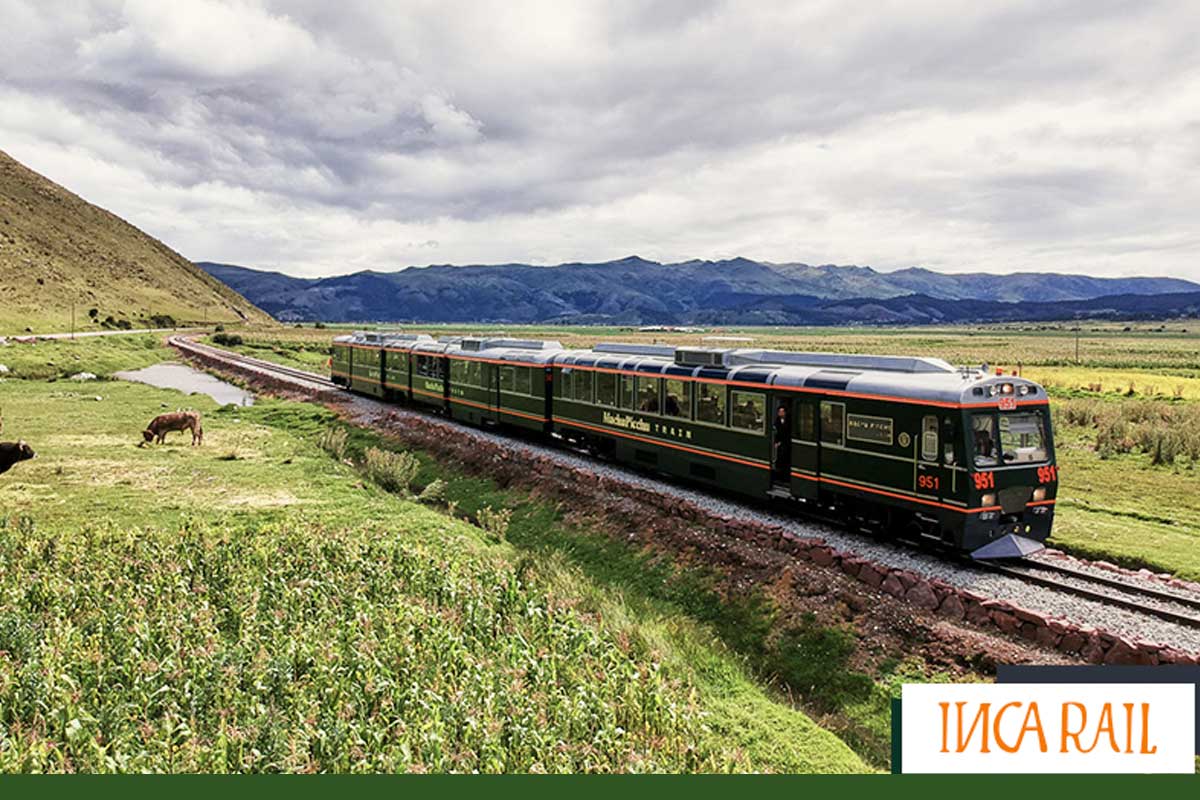
The process mirrors Peru Rail’s system. Select your route and date, choose a service tier, enter passenger details with passport numbers, and pay online. Inca Rail’s website is well-designed and the booking process is generally faster than Peru Rail’s for simple purchases.
How far in advance should you book?
This is the single most important practical piece of advice on this page: book early. During high season (May through October), popular departure times from Ollantaytambo sell out 60–90 days in advance. During major Peruvian holidays (Inti Raymi in June, Fiestas Patrias in late July), even 90-day advance booking may find limited options.
In low season (November through April, excluding Christmas–New Year), 2–3 weeks is generally sufficient. But there is no penalty for booking months ahead, and the peace of mind is worth it.
- Peak season (May–Oct): book 60–90 days in advance
- Shoulder season (Nov, Apr): book 2–4 weeks in advance
- Low season (Dec–Mar): 1–2 weeks usually sufficient
- Holidays (Inti Raymi, Fiestas Patrias, Christmas): book as early as possible regardless of season
Can I buy tickets at the station?
Technically yes, but in practice it is not recommended. Walk-up availability at Ollantaytambo station is extremely limited during high season, and there is no guarantee of getting on the train you need on the day you need it. During peak periods, trains run at near-full capacity. Always book online in advance.
Cancellation and change policies
Peru Rail: Tickets can be cancelled or changed online up to 3 hours before departure, subject to a change fee that varies by service class and how far in advance the change is made. The Hiram Bingham has a stricter cancellation policy with higher fees closer to the travel date.
Inca Rail: Changes and cancellations are permitted up to 6 hours before departure for most services, with a service fee. Full cancellations made more than 48 hours before departure generally qualify for a partial or full refund depending on the fare type purchased.
Both operators have more flexible policies when changes are requested well in advance. Review the full terms at time of booking, as these policies can change seasonally.
What to Expect on the Train to Machu Picchu
Luggage restrictions — important to know before you pack
Both operators enforce luggage limits that catch many travelers off guard:
- Peru Rail: 5 kg per person in overhead compartments
- Inca Rail: 8 kg per person
- Large bags (suitcases) are not permitted in the carriage on either service
- Luggage above the limit must be sent separately on a cargo service (available at both stations)
This is particularly relevant for travelers who plan to take the train to Aguas Calientes and then continue to a different destination. You will need to pack light for the train leg or arrange luggage storage in Ollantaytambo or Cusco.
Note: If you are doing a multi-day itinerary that includes the Inca Trail or Salkantay Trek, your guide will typically handle logistics for leaving excess luggage in Cusco and transporting only your essential overnight gear to the trailhead.
Onboard experience and what’s included
Even on the budget Expedition and Voyager services, the train to Machu Picchu is a genuinely memorable journey. The route passes through dramatic Andean scenery from the moment it descends from the highlands: terraced hillsides give way to cloud forest as the altitude drops, with the Urubamba River running alongside the tracks for much of the journey and Inca ruins visible on the valley walls.
On mid-range services (Vistadome, 360°), an onboard food and beverage service is included. The Vistadome fashion show features artisans modeling traditional Andean textiles — it is brief and authentic, not a performance, and most travelers appreciate it.
On premium services (First Class, Observatory), full table service with multi-course meals and cocktails elevates the journey into an event in itself.
The best seat on the train
For the Ollantaytambo departure: the most dramatic scenery is on the left side of the train (when facing the direction of travel). The cloud forest closes in from both sides after Ollantaytambo, but the river gorge views and the most dramatic waterfall sightings tend to be on the left. On mid-range trains with glass ceilings this distinction matters less.
For the Poroy departure: the first hour crosses the altiplano and the Sacred Valley descent is visible on both sides. The left side advantage applies from Ollantaytambo onward.
You will also pass ruins visible from the train window on both departures, including terracing systems and what may be watchtower structures. There is no official commentary on standard services, so either research these in advance or consider a guided tour package where your guide can provide context.
From Aguas Calientes to Machu Picchu
Aguas Calientes (officially Machu Picchu Pueblo) is the end of the train line. From here, Machu Picchu is still a 25-minute bus ride up a winding mountain road. The shuttle bus is operated by Consettur and departs from a terminal a short walk from the train station. Return buses run from the citadel entrance throughout the day.
- Bus ticket cost: approximately $12–16 per person round-trip (must be purchased separately from train tickets)
- Bus operating hours: approximately 5:30am–5:30pm (check current times)
- Journey time to citadel entrance: approximately 25 minutes
- Alternative: the hiking trail up takes 1 hour 30 minutes and is a legitimate option for those who want to earn the arrival
Coordinating your train timing with your entry slot
Since 2020, Machu Picchu operates on a strict timed entry system with morning and afternoon slots across multiple circuits. This is the most important logistical detail for planning your train timing.
The most common mistake is booking a train that arrives in Aguas Calientes too close to your entry time. Factor in: train journey (1h 40m from Ollantaytambo), walk to bus terminal (10 minutes), bus queue and ride (30–45 minutes total). You should arrive in Aguas Calientes at least 1.5–2 hours before your entry slot.
For a morning entry (e.g., 6am–7am), this means departing Ollantaytambo no later than 5:30am. A guided tour handles all of this coordination for you, removing the risk of arriving late and missing your entry window.
Our Machu Picchu guided tours include pre-coordinated train tickets, entry permits for your chosen circuit, bus tickets, and a professional guide. No logistics stress. View packages →
Practical Tips for the Train to Machu Picchu
Rainy season considerations (December–April)
The rainy season in the Cusco region runs roughly from November through April, with December through March being the wettest months. The train to Machu Picchu operates year-round (unlike the Inca Trail, which closes in February), but there are some important differences:
- Poroy station may close during January–April due to landslide risk on the route
- Occasional track closures or delays due to rain and landslides are possible; check operator updates
- Machu Picchu itself is beautiful in the rainy season — fewer crowds, lush green vegetation, and dramatic misty atmosphere
- January–March: low season pricing and high availability on trains
What to bring on the train
- Passport (required for boarding — your name on the ticket must match your passport exactly)
- Printed or downloaded e-ticket (mobile data can be unreliable at some stations)
- Light layers — the cloud forest is cool and humid; Aguas Calientes is warm and can be rainy
- Water and snacks for the journey if not on a service that includes food
- Camera — the journey itself is worth photographing
The bimodal service from Cusco
Peru Rail operates a ‘bimodal’ service from Cusco that combines a bus to Poroy or Ollantaytambo with an included train connection. This is essentially a transfer service rather than a full train journey from central Cusco — there is no train station in the center of Cusco itself. Most travelers book the train from Ollantaytambo separately and arrange their own transfer to the station.
Frequently Asked Questions: Trains to Machu Picchu
Does the train go directly to Machu Picchu?
No. The train terminates at Aguas Calientes (Machu Picchu Pueblo), which is at the base of the mountain. From there, a shuttle bus (approximately $12–16 round-trip) takes 25 minutes up to the citadel entrance. You can also walk up in approximately 1 hour 30 minutes via the hiking trail.
How long is the train ride from Cusco to Machu Picchu?
There is no train station in central Cusco. The most common approach is a private transfer to Ollantaytambo (1.5–2 hours by road) and then a train to Aguas Calientes (approximately 1 hour 40 minutes). Total journey time from Cusco door to Aguas Calientes is typically 3.5–4 hours. From Poroy station (near Cusco), the train journey alone takes approximately 3 hours 30 minutes.
How much do train tickets to Machu Picchu cost?
Budget options start at approximately $51–63 one-way on the Peru Rail Expedition or Inca Rail Voyager. Mid-range services (Vistadome, 360°) run $75–$122. Premium and luxury options run $120–$180 (First Class, Observatory) and $460–$465+ for the Hiram Bingham. Return tickets are approximately double the one-way price. Prices vary by season and availability.
What is the cheapest train to Machu Picchu?
Peru Rail Expedition is consistently the cheapest option, starting at around $51 one-way from Ollantaytambo in low season. Inca Rail’s Voyager starts at approximately $54. Both are perfectly comfortable, modern trains.
What is the difference between Peru Rail and Inca Rail?
Both operate the same route (Ollantaytambo to Aguas Calientes) with similar travel times. Peru Rail has more daily departures, more service tiers, and additionally operates from Poroy (near Cusco). Inca Rail tends to have more modern carriage design at the mid-range level. At the entry level, prices are nearly identical; the choice largely comes down to schedule and availability.
Is the Vistadome worth the extra cost?
For most travelers doing the trip once, yes. The glass roof panels and larger panoramic windows make a real difference on the Ollantaytambo–Aguas Calientes stretch, particularly as the train descends into the cloud forest. The price premium over the Expedition is typically $20–50. Inca Rail’s 360° is an excellent alternative at a similar price with a complimentary meal included.
How far in advance should I book train tickets?
During high season (May–October), book 60–90 days in advance. Popular morning departures from Ollantaytambo routinely sell out. There is no fee for booking early and no benefit to waiting.
Can I buy train tickets at the station?
Walk-up tickets exist in theory but are extremely limited, especially during high season. Do not plan your trip around walk-up availability. Always book online in advance at perurail.com or incarail.com.
Do train tickets include entry to Machu Picchu?
No, except on the Hiram Bingham service, which includes entry tickets and a guided tour. All other train tickets must be purchased separately from Machu Picchu entry tickets. Entry tickets are sold through the official Peruvian government portal and are also often limited in advance — coordinate both bookings before your trip.
What are the luggage restrictions on the train to Machu Picchu?
Peru Rail allows 5 kg per person in overhead compartments. Inca Rail allows 8 kg. Large suitcases are not permitted in carriages on either operator. Excess luggage can be sent on a separate cargo service.
What happens if I miss my train?
Contact the operator immediately. Both Peru Rail and Inca Rail may allow you to board a later service if space is available, subject to a fee and availability. Missing a train is not the end of the world, but it may compress your time at Machu Picchu or require overnight accommodation in Aguas Calientes. Build buffer time into your itinerary, especially if connecting to a long-distance bus afterward.
Can I take a bus instead of the train to Machu Picchu?
Not directly. The only practical alternatives to the train are the Hidroelectrica route (8–10 hours of shared vehicle transfers plus a train or walk at the end) or the multi-day Inca Trail or Salkantay Trek on foot. There is no road that connects to Aguas Calientes.
Which is the best train to Machu Picchu?
For budget travelers: Peru Rail Expedition or Inca Rail Voyager. For most travelers wanting a good experience without luxury pricing: Inca Rail 360° (best value) or Peru Rail Vistadome. For a special occasion: Hiram Bingham. The ‘best’ train is the one that matches your budget and travel style.
Which side of the train has the best views?
On the Ollantaytambo departure, the left side of the train (facing the direction of travel) tends to have the best river gorge and cloud forest views. On mid-range services with glass roof panels, both sides are excellent. On the Poroy departure, the scenery wraps around both sides on the highland descent.
Follow us for more info on Instagram as @machu_picchu.org
When is rainy season?
The rainy season in Cusco and Machu Picchu is from October to March. During these months, trains only run to Ollantaytambo station, then from and to the city of Cusco it is by bus, which is called the Bimodal service.
What is the cost of the Inca Princess wagon?
Inca Rail’s The Private Train does not have a price listed on its website, but it is around $500 one way or $1,000 round trip per person.