 English
 Spanish
 Portuguese


High in the Andes Mountains, travelers from around the world come searching for answers about the true intihuatana stone function, drawn by one of the most enigmatic Inca creations ever discovered: the Intihuatana stone of Machu Picchu. Thousands of tourists walk past it every year, fascinated by its carved geometric angles and its unusual shape. Many feel its spiritual presence, others admire its engineering, and researchers continue to debate its true purpose.
Although several theories exist, most scholars agree that the intihuatana stone function was not accidental. Its design, orientation, and alignment with the sky reveal the sophisticated knowledge the Incas possessed. In fact, understanding the intihuatana stone function has become essential for interpreting Inca astronomy and their unique relationship with the sun.
This blog dives deep—historically, culturally, astronomically, and spiritually—into everything known about this mysterious stone.
2. The Origins of the Intihuatana

The word Intihuatana comes from Quechua, meaning “the place where the sun ties” or “the hitching post of the sun.”
This name alone gives us a powerful cultural hint.
For the Incas, the sun (Inti) was a living deity.
Its movement shaped agriculture, seasons, rituals, ceremonies, and the political authority of the Sapa Inca.
The Incas built several intihuatanas throughout the empire, but the one at Machu Picchu is the most intact. Others were destroyed by the Spanish during colonization, who believed these stones represented pagan worship.
The survival of this one stone gives us a rare window into Inca cosmology.
3. Physical Description, More Than Just a Rock

The Intihuatana at Machu Picchu is not a random carved rock.
Its shape is deliberate:
- A base platform carved into natural bedrock
- A stepped structure resembling miniature terraces
- A central vertical stone pillar rising from the top
- Sharp angles pointing toward celestial directions
Every carving has intention.
Every angle has significance.
Every surface interacts with sunlight differently during the year.
This is why understanding the intihuatana stone function requires examining architecture, astronomy, religion, and physics together.
4. Connection to Inca Astronomy

The Incas were master astronomers.
Without telescopes, they tracked:
- Solstices
- Equinoxes
- Zenith sun events
- Lunar cycles
- Constellations
- Solar shadows
- Cosmic alignments
The Intihuatana appears to serve as a physical interface between the Incas and the cosmos.
The Sun at Key Dates
Researchers have shown that the stone casts specific shadows on:
- June Solstice (Winter solstice in the Andes)
- December Solstice (Summer solstice)
- March Equinox
- September Equinox
During these dates, the shadows align perfectly with edges of the stone, indicating intentional design.
5. The Name Reveals Its Purpose
If Intihuatana means “to tie the sun,” what does that imply?
For Andean peoples, the sun was believed to travel lower during winter, appearing as if it might abandon the world. Rituals “tied” it to Earth symbolically to keep it returning.
This cultural idea connects directly with the intihuatana stone function:
A physical tool used to observe, honor, and symbolically secure the sun.
6. The Stone as a Solar Clock

One of the strongest theories is that the stone acted as a solar clock or calendar.
As the sun moves across the sky, the vertical pillar casts shadows on the terraces and slopes of the stone. These shadows indicate:
- The time of day
- The season
- The sun’s changing position
- Important agricultural cycles
For a civilization dependent on farming, precisely tracking the solar calendar was essential.
The Intihuatana may have been one of the Incas’ most accurate instruments for this purpose.
7. Ritual and Religious Significance
Astronomy alone does not explain the stone.
The Incas intertwined science, religion, and royalty.
Priests likely used the Intihuatana for:
- Solstice ceremonies
- Offerings to the sun
- Blessings for crop fertility
- Political symbols of power
- Ritual communication with the cosmos
Because the Sapa Inca was considered a “child of the sun,” instruments that controlled or honored sunlight reinforced his authority.
Thus, the intihuatana stone function also had a political dimension.
8. Engineering Mastery Behind the Stone
Incas did not carve stones randomly.
They studied bedrock angles, mountain lines, and the path of the sun before shaping anything.
The stone aligns with:
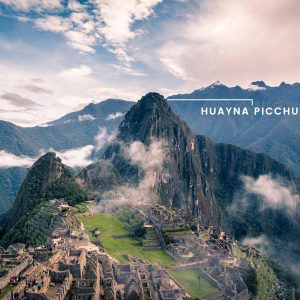
- The mountains of Huayna Picchu and Putucusi
- The cardinal directions
- Important landscape features considered sacred
The precision suggests mathematical planning. The fact that it remains intact after centuries of earthquakes proves the Incas’ engineering skill.
The stone is placed on a natural magnetic anomaly area, which some researchers believe was intentional.
9. The Stone as a Landscape Marker
In Andean tradition, sacred geography is everything.
Mountains (apus) are spiritual beings.
Rivers, valleys, caves, and rocks form energetic networks.
The Intihuatana sits in a location that:
- Connects visually to several sacred peaks
- Aligns with Machu Picchu’s urban layout
- Sits inside a ceremonial sector
- Oversees the Urubamba River’s curve
This makes it a geographical anchor—an interface between humans, land, and sky.
10. Exploring the Stone’s Geometric Codes
The stone’s angles are not random.
Researchers have found:
- 45-degree cuts tied to solstice sunrise
- Right angles aligned with cardinal directions
- Steps symbolizing agricultural terraces
- A pillar marking vertical solar movement
The stone is essentially a 3D diagram of the Inca worldview.
Its geometry suggests knowledge of:
- Trigonometry
- Solar geometry
- Cardinal orientation
- Shadow measurement
- Earth–sky cycles
This complexity shows how advanced the civilization truly was.
11. Does the Stone Have Energetic Properties?
Some visitors report:
- Tingling sensations
- Warmth
- Vibration-like feelings
- Emotional calmness
- Mental clarity
While not scientifically proven, these experiences reflect how Andean cultures viewed the stone: as a living object.
Local shamans believe the stone emits energy due to:
- Its connection to bedrock
- Its alignment with apus
- Its solar interaction
Whether spiritual or psychological, this aspect plays a role in its cultural meaning.
12. The Spanish Tried to Destroy Them
During colonization, Spanish forces destroyed most Intihuatana stones, believing they were instruments for pagan rituals.
They succeeded in breaking stones across:
- Cusco
- Sacred Valley
- Pisac
- Ollyantaytambo
- Vilcabamba
But Machu Picchu was hidden from the Spanish, allowing its stone to survive untouched.
This makes it one of the rare intact Inca ritual instruments in existence.
13. Modern Scientific Theories
Researchers suggest several possible interpretations of the intihuatana stone function:
A Solar Observatory
Tracks equinoxes, solstices, and zenith passages.
A Sacred Ritual Marker
Used in ceremonies to honor the sun and mountains.
A Political Symbol
Reinforced the Sapa Inca’s divine authority.
A Calendar Tool
Guided planting, harvests, and seasonal transitions.
A Geographical Anchor
Connects sacred landscape points and cosmic lines.
Each theory reveals a different layer of its significance.
14. Why Machu Picchu Needs the Stone
Machu Picchu is believed to be:
- A royal estate
- A ceremonial center
- A pilgrimage destination
- A solar observatory
- A sacred refuge
The Intihuatana ties all these functions together.
Without it, Machu Picchu’s spiritual geography would be incomplete.
The stone acts as the heart of the site—connecting architecture, landscape, religion, and astronomy.
15. Visiting the Intihuatana Today
Travelers can still see the stone, but touching it is prohibited due to past accidents, including a film crew that damaged a corner while shooting a commercial.
When you visit, you’ll notice:
- Its elevated platform
- Its panoramic view
- Its peaceful atmosphere
- Its alignment with the landscape
Many visitors pause here longer than expected, feeling drawn to its mystery.
16. The Intihuatana in Popular Culture
The stone has appeared in:
- Documentaries
- Theories by archaeologists
- Mystical travel blogs
- Scientific studies
- Films
- New Age beliefs
- Academic journals
Some claim it is a portal.
Others believe it is an energy conductor.
Scientists study it as an astronomical instrument.
Its mystery fuels curiosity worldwide.
17. Why the Intihuatana Remains an Enigma
Despite research, the stone retains mystery because:
- The Incas left no written language
- Spanish destruction erased evidence
- Inca astronomy blended science and spirituality
- Landscape alignment is complex
This combination leaves room for interpretation.
And perhaps that mystery is part of its power.
18. Final Thoughts, A Legacy Carved in Stone
The Intihuatana is not just an archaeological artifact.
It is a message carved in stone—a legacy of:
- Inca engineering
- Spirituality
- Astronomy
- Landscape mastery
- Cultural identity
Understanding the intihuatana stone function brings us closer to understanding the Inca world itself.
This stone ties the sun, the land, the mountains, and the people together.
It stands as a silent witness of ancient wisdom that still resonates today.
Discover With Us
Discover with us the hidden stories, astronomical secrets, and spiritual meaning behind ancient Inca masterpieces like the Intihuatana stone. Our mission is to guide you through the past with clarity, curiosity, and a deep respect for Andean culture.
If you want to explore more archaeological wonders, learn about ancient engineering, and follow our journey across the Andes…
👉 Follow us on Instagram: @machupicchu.mp
Join our community and continue uncovering the mysteries of the Inca world with us.