 English
 Spanish
 Portuguese

In May 2026, National Geographic published an article that shook the archaeological world: hidden in Espinar, Cusco, a 600-structure Inca sanctuary has quietly existed for centuries — almost entirely unknown to international travelers.
It’s called T’aqrachullo. And it’s just a few hours from Cusco.
This is not a minor ruin. According to archaeologist Emerson Pereira, this complex holds the same religious rank as Qorikancha, Pachacamac, and Huánacauri — the three most sacred temples of the Inca Empire. That makes T’aqrachullo the fourth most important site in the entire Tahuantinsuyo.
In this guide, we break down what it is, where it is, how to visit, and why it’s becoming one of the most sought-after destinations in Peru right now.
What Is T’aqrachullo? The Fourth Most Sacred Temple of the Inca Empire
T’aqrachullo is an Inca archaeological complex perched on a rocky cliff in the province of Espinar, in the southern part of the Cusco region. Its scale and structural variety set it apart from most known sites in the area.
The complex holds more than 600 structures of different types: dwellings, funerary enclosures, colcas (imperial storehouses), ceremonial spaces, and sections of the Inca road system. The buildings are both circular and rectangular in shape — a reflection of the site’s architectural hierarchy and the different functions it served: religious, administrative, and social.
T’aqrachullo was declared a National Cultural Heritage site by Peru in 2010. But it only opened formally to tourism in December 2024, after years of restoration and structural consolidation work.


What Does the Name T’aqrachullo Mean in Quechua?
The name comes from two Quechua words:
- T’acra: mother rock — the bedrock of the territory
- Chullo: frozen water — a reference to the natural water deposits that characterize the landscape
Together, the name paints an accurate picture of the site’s physical environment: a stone fortress on a highland plateau where water freezes into the landscape. It’s a geographic name, not a ceremonial one.
T’aqrachullo and María Fortaleza: Are They the Same Place?
Yes. Same archaeological site, two different names.
T’aqrachullo is the original Quechua name, inherited from the first ayllus (communities) that inhabited the area. During the Spanish colonial period, the site was renamed María Fortaleza — the name that still appears in some local signs and documents today.
The Quechua name is now regaining traction, especially following National Geographic’s coverage. If you’re researching the site, you may find it listed under either name.
More Than 600 Structures: What Was Found at T’aqrachullo?
The excavations and restoration work revealed a site of remarkable functional complexity. Key findings include:
- Residential enclosures of varying sizes, suggesting a permanent population of significant scale
- Funerary structures with associated grave goods — thousands of goldwork pieces, ceramics, and ritual objects
- Imperial colcas, the Inca storehouses used to redistribute resources along the Qhapaq Ñan road network
- Ceremonial spaces that confirm the site’s sacred status within the Inca religious system
- Sections of the Inca road connecting T’aqrachullo to the Empire’s broader vial network
The combination of all these functions in a single location is what distinguishes T’aqrachullo from other peripheral sites. This was not a checkpoint or a simple fortress. It was a strategic node of the Empire.

Where Is T’aqrachullo? Location, Map, and Distance from Cusco
T’aqrachullo is located in the district of Suyckutambo, province of Espinar, in the southern Cusco region. The site sits on top of a rocky cliff with a direct view toward the Virginniyoc river canyon, near its confluence with the Totorani river.
The altitude, the open highland terrain, and the views down into the canyons make the experience visually striking from the moment you arrive.


How Far Is T’aqrachullo from Cusco City?
T’aqrachullo is approximately 230 km from Cusco city via the route toward Espinar. By road, the journey takes around 4 to 5 hours, depending on your starting point and road conditions.
There is no regular tourist transport between Cusco and Espinar. The most practical way to get there is by private vehicle or as part of an organized tour from Cusco.
How to Get to T’aqrachullo from Cusco: Routes and Transport Options
Option 1 — Private tour from Cusco (recommended) The most comfortable and reliable option. A local guide with private transport picks you up at your hotel in Cusco and handles the full return journey. Having a guide on-site makes a real difference — the context and history of T’aqrachullo aren’t immediately obvious from the structures alone.
Option 2 — Public bus from Cusco to Espinar Buses run from Cusco’s main bus terminal to Espinar (Yauri). Travel time is around 5–6 hours. From Espinar, you’ll need local transport to reach the site itself. This is the most affordable option but also the most logistically demanding.
Option 3 — Private vehicle Feasible for travelers comfortable with Andean roads. A 4WD vehicle is recommended for the final stretches leading to the site. The road is manageable during the dry season but can be difficult during the rainy months.
Important: The final approach to the site requires a walk on uneven terrain. Trekking shoes are essential.
The History of T’aqrachullo: An Inca Empire Hub on the Qhapaq Ñan
What makes T’aqrachullo archaeologically distinctive isn’t just its size — it’s its position within the Inca imperial system.
The site was part of the Qhapaq Ñan — the great road network connecting the four suyos of the Tahuantinsuyo — and its location in Espinar was deliberate. It controlled the passage between the altiplano and the productive southern Andean zones, giving it a strategic role in the Empire’s logistics: resource redistribution, troop movement, and territorial administration.
That position explains why the site accumulated such a density of construction, and why archaeology places it at the highest levels of the Inca religious hierarchy.

T’aqrachullo’s Role in Tahuantinsuyo Administration
The colcas found at the site are among the most revealing elements. In the Inca system, storehouses weren’t simple warehouses — they were the redistribution mechanism that kept the Empire functioning. Agricultural and livestock surpluses were concentrated in these deposits and then distributed to state workers, the military, and local communities.
The presence of colcas at this scale at T’aqrachullo confirms the site held high-rank administrative functions within the imperial apparatus. This was not a minor provincial outpost.
At the same time, the scale of the ceremonial spaces confirms its sacred status. The combination of administration and religion in a single complex was characteristic of the most important nodes in the Tahuantinsuyo.
Archaeological Finds: Goldwork, Ceramics, and Funerary Structures
Among the objects recovered during excavations: thousands of goldwork and metalwork pieces, ceramics, tools, and ritual items. Many were found in funerary contexts, associated with structures specifically designed for burial use.
This kind of grave assemblage has double value: archaeological, because it helps date and contextualize the site’s use periods; and symbolic, because the quality and quantity of objects speaks to the rank of the individuals buried there.
The finds are still being studied and documented. As more results are published, the profile of T’aqrachullo will only sharpen.


T’aqrachullo as National Cultural Heritage: Recent History of the Site
The site was declared National Cultural Heritage of Peru in 2010 by the Ministry of Culture. For years, however, that designation didn’t translate into visible conservation work or a real tourism opening.
That changed gradually. In December 2024, after a restoration process that consolidated more than 300 structures, the site was formally opened to visitors. It is, in that sense, a genuinely new destination on the Cusco circuit — with all the freshness and authenticity that implies.
The National Geographic feature in May 2026 was the trigger that put it on the international map.
T’aqrachullo and National Geographic: Why the World Is Talking About This Sanctuary

Some archaeological sites exist in specialist literature for decades before the world discovers them. T’aqrachullo is one of those.
Its heritage designation dates to 2010. Its restoration was completed in 2024. But it was the National Geographic feature in May 2026 that turned it into one of Peru’s most searched destinations in a matter of days.
That’s not random. National Geographic doesn’t cover minor sites. When they publish a feature of this kind, the archaeological data and context warrant it.
What Did National Geographic Reveal About T’aqrachullo in 2026?
The NatGeo feature brought several elements to general audiences for the first time:
- The true scale of the complex: more than 600 structures with diverse functions
- Its connection to the Qhapaq Ñan and its role in the Inca road network
- The quality and volume of archaeological finds — particularly the funerary material and goldwork pieces
- The testimony of archaeologist Emerson Pereira, who places T’aqrachullo as the fourth most important temple in the Tahuantinsuyo
What NatGeo can’t give you is the experience of actually being there. That only happens when you show up.


See: National Geographic article
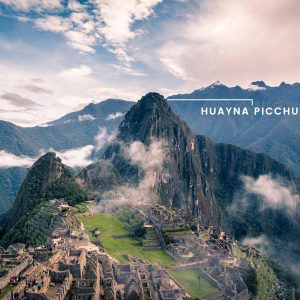
Is T’aqrachullo Bigger Than Machu Picchu?
It’s the question circulating most widely since the NatGeo article dropped, and it deserves a straight answer.
In number of recorded structures: yes. T’aqrachullo has more than 600 structures. Machu Picchu has approximately 200 principal buildings within its walled area. Purely by count, T’aqrachullo is a larger complex.
In visual impact and architectural refinement: they’re different sites. Machu Picchu stands out for the precision of its stonework, its extraordinary mountain setting, and an exceptional level of preservation. T’aqrachullo is more expansive, rawer, closer to the unmediated Andean landscape. The experience is different — not lesser.
In historical importance: comparable, with nuance. If the archaeological evidence holds, T’aqrachullo may have held an even higher religious rank within the Inca system than Machu Picchu. But Machu Picchu carries over a century of research and documentation that T’aqrachullo is only beginning to accumulate.
The comparison makes sense to communicate the site’s significance. But anyone who visits T’aqrachullo expecting a replica of Machu Picchu is going to be surprised — in the best possible way. It’s its own thing.
Complete Visitor Guide to T’aqrachullo: Everything You Need to Know


How Much Does the Entrance to T’aqrachullo Cost?
The site is managed by Peru’s Ministry of Culture. The entrance fee is accessible and considerably lower than the better-known Cusco circuits.
📌 Note: Prices may be updated. Contact us before your visit to confirm current admission fees and whether they’re included in any tour package.
Best Time of Year to Visit T’aqrachullo
Like most sites in the southern Cusco highlands, T’aqrachullo has two distinct seasons:
Dry season (April – October) — recommended Clear skies and no rain guarantee the best conditions for exploring the site and taking in the canyon views. Daytime temperatures are pleasant, but mornings and evenings can be very cold — Espinar sits above 3,900 meters altitude.
Rainy season (November – March) Rainfall makes access roads more challenging, particularly on the final stretches leading to the site. The landscape turns greener but conditions are less predictable. Not impossible to visit, but requires extra planning.
Read more at: Best time to visit Cusco.
What to Pack for T’aqrachullo: Altitude, Weather, and Gear
Espinar is above 3,900 meters. That has practical implications you shouldn’t underestimate:
Clothing and footwear
- Trekking shoes with solid grip — non-negotiable; the terrain is rocky and uneven
- Layered clothing: temperatures can shift sharply between morning and midday
- A light windproof or waterproof jacket, even in dry season
- Sun hat or cap
Health and hydration
- Enough water — there are no supply points on-site
- Snacks or a packed lunch if you’re spending several hours at the site
- High-SPF sunscreen (UV radiation at altitude is significantly stronger)
- If you’re sensitive to altitude, spend at least two nights in Cusco before making this trip
Gear
- Trekking poles (optional but useful on the uphill sections)
- Camera or smartphone with good battery life — the landscape demands it
- A small daypack to carry everything above
Can You Visit T’aqrachullo Independently, or Is It Better with a Guide?
You can visit independently if you have your own transport and experience navigating the southern Cusco region.
That said, there are concrete reasons most travelers choose to go with a guide:
- The logistics from Cusco are complex without a private vehicle. Public transport gets you to Espinar, not to the site.
- Archaeological context changes everything. T’aqrachullo doesn’t have Machu Picchu’s signage infrastructure. Without a guide, it’s easy to walk through the site without understanding what you’re looking at.
- A local guide knows the terrain. They know which areas are most significant, how long to spend in each zone, and how to adapt the visit to your group.
If you just want to see the site and move on, you can go alone. If you want to actually understand it, go with someone who knows it.
Tour to T’aqrachullo from Cusco with Traveleez: Book Direct with a Local Operator
We’re based in Cusco. Not an OTA, not a middleman — when you book with us, you’re talking directly to the people organizing your tour.
That means direct prices, first-hand information, and the ability to adjust the itinerary to your pace and interests.
What’s Included in the T’aqrachullo Tour?
The tour covers everything you need for a comfortable and meaningful day:
- ✅ Hotel pickup in Cusco
- ✅ Private round-trip transport (4WD where terrain requires)
- ✅ Professional licensed guide, specialized in Inca history and Quechua culture
- ✅ Site entrance fee included
- ✅ Traditional lunch from the region (confirm per package)
- ✅ Travel insurance for the duration of the excursion
Not included:
- Personal expenses
- Tips (optional)
Group size: we offer private tours and small-group tours (maximum 8 people). Ask about availability.
Can You Combine T’aqrachullo with Machu Picchu on the Same Trip to Cusco?
Yes — and it’s a combination we actively recommend.
Most travelers coming to Cusco already have Machu Picchu on their itinerary. Adding T’aqrachullo lets you extend that experience with a site of equal historical rank but completely different in landscape, atmosphere, and feel.
A workable structure for a 5 or 6-day trip to Cusco:
| Day | Activity |
|---|---|
| Day 1 | Arrive in Cusco, acclimatize |
| Day 2 | Cusco city tour + Sacred Valley |
| Day 3 | Machu Picchu (full day) |
| Day 4 | Rest / local visit |
| Day 5 | T’aqrachullo (full day excursion) |
| Day 6 | Departure or continue journey |
If you’d like a personalized itinerary built around your dates and interests, reach out. That’s part of what we do.
Frequently Asked Questions About T’aqrachullo
Is T’aqrachullo Open Year-Round?
Yes. The site has been open for visits since its official tourism opening in December 2024. The recommended season is April through October (dry season), but there’s no formal closure during the rainy months. We recommend checking access conditions before traveling between January and March.
How Long Does It Take to Visit T’aqrachullo?
A complete walkthrough of the complex takes between 3 and 4 hours. Adding travel time from Cusco (roughly 4–5 hours each way), a full day is well-spent. This is why the excursion is always structured as an all-day tour.
Are There Facilities (Bathrooms, Restaurants) at T’aqrachullo?
Basic facilities are limited, as is typical of recently opened archaeological sites. There are restrooms at the entrance area, but no food or drink service on-site. Organized tours include lunch or provisions. If you’re visiting independently, plan ahead.
Is T’aqrachullo Accessible for Elderly Visitors or Those with Limited Mobility?
The terrain is rocky and uneven. There are uphill sections and unpaved ground throughout the site. For visitors with limited mobility or joint issues, the full circuit can be physically demanding.
If this applies to you, let us know before booking. We can adapt the visit to cover the most accessible sections of the site and ensure a comfortable, safe experience.
Do You Need to Book in Advance?
There’s no quota system like Machu Picchu, but we recommend booking at least 48–72 hours ahead to secure private transport and a guide.
During peak season (June–August and Easter week), demand increases significantly. The earlier you book, the better.
Have more questions? Write to us directly. We’re local operators in Cusco and we respond within 24 hours.