 English
 Spanish
 Portuguese



Quick answer: A horse at Rainbow Mountain (Vinicunca) costs S/ 100 (~US$29) round trip or S/ 80 (~US$23) uphill only on the Cusipata route, and S/ 80 (~US$23) round trip or S/ 60 (~US$17) uphill only on the Pitumarca route. On the Cusipata route you can also hire a horse partway up: about S/ 50 (~US$14.50) from the halfway point and S/ 20 (~US$6) for the last stretch. Payment is cash only, in Peruvian soles, directly to the local horse handler (arriero). The two routes have different prices because each one is managed by a different local community.
USD amounts are approximate, calculated at S/ 3.45 per US$1.
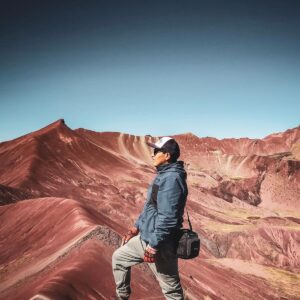
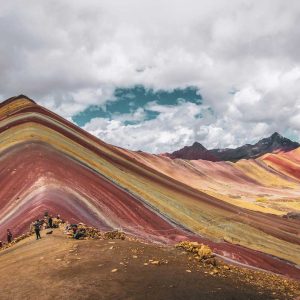
Rainbow Mountain, also known as Vinicunca, is one of the most visually striking natural wonders in South America. Located in the Peruvian Andes at more than 5,000 meters (16,400 ft) above sea level, it has become a top destination for travelers seeking breathtaking scenery, unique geological formations, and an unforgettable trekking experience. Its colorful layers, formed by mineral deposits over thousands of years, attract hundreds of thousands of visitors every year.

While the hike to the viewpoint is rewarding, the altitude makes the trek challenging. Because of this, many travelers consider renting a horse instead of walking the entire route. Knowing the Rainbow Mountain horse cost in advance, and which route you will take, helps you plan your budget, avoid surprises, and decide whether the horse option is right for you.
This guide covers updated 2026 prices for both routes, how the horse system works, the trail section by section, and practical tips from a local Cusco operator.
Rainbow Mountain Horse Prices 2026 at a Glance
| Route | Round trip | Uphill only | Hire partway up? | Other transport |
|---|---|---|---|---|
| Cusipata (closer to Cusco) | S/ 100 (~US$29) | S/ 80 (~US$23) | Yes: ~S/ 50 (~US$14.50) from halfway, ~S/ 20 (~US$6) for the last stretch | Horses only |
| Pitumarca (shorter hike) | S/ 80 (~US$23) | S/ 60 (~US$17) | No: the horse trail is separate from the hiking trail | Horses, ATVs (quad bikes) and motorbikes |
These are the standard starting rates. The final price can vary slightly by section of the trail and by how you arrange it with the handler, so always agree on the price before you start.
What Makes Rainbow Mountain Unique?
Rainbow Mountain is famous for its naturally painted slopes, featuring shades of red, gold, turquoise, and lavender. These colors are the result of minerals such as iron oxide, sulfur, and copper, exposed through geological movements and erosion. The mountain remained hidden beneath ice for centuries until warmer temperatures revealed its vibrant layers.
Today, Rainbow Mountain is one of the most photographed attractions in Peru. Its remote location, high elevation, and dramatic landscape make the experience feel like stepping onto another planet. Visitors often describe the journey as challenging yet deeply rewarding.
However, the altitude can be overwhelming for travelers who are not acclimated. This is where the option of renting a horse becomes helpful and sometimes essential.
The Two Routes to Rainbow Mountain: Cusipata and Pitumarca
There are two main routes to the Vinicunca viewpoint, and this is the single most important factor in what you will pay for a horse. Each route is managed by a different local community, and each community sets its own prices.
Cusipata Route
- The route closest to Cusco.
- Horses are the only transport option on the trail.
- The horse trail runs alongside the hiking trail, so you can start walking and hire a horse partway up if you get tired. The price depends on how much of the trail is left.
- Prices: S/ 100 round trip, S/ 80 uphill only, about S/ 50 from the halfway point and about S/ 20 for the final section.
Pitumarca Route
- The hike is shorter, so horse prices are lower.
- Besides horses, this route offers ATVs (quad bikes) and motorbikes.
- Horses and vehicles use a separate trail from hikers, so you cannot hire a horse halfway up. You need to choose your option at the start.
- Prices: S/ 80 round trip, S/ 60 uphill only.
Our recommendation: whichever route you take, booking the round trip at the trailhead is the safest and best-value choice. On the Pitumarca route it is especially important to decide before you start, because there is no way to hire a horse later on the trail.
The Importance of Understanding the Horse Option

Many visitors underestimate the physical challenge of the hike. Even though the trail is not very steep, the thin air makes every step more demanding. For some travelers, walking the entire distance is manageable. For others, the altitude quickly becomes a barrier.
That’s why understanding the horse cost and options matters. It allows you to prepare both financially and mentally, and to decide in advance whether to hike, rent a horse for part of the trail, or ride for the whole ascent.
The horse service is especially helpful for:
- Travelers who are not used to high elevation
- Families with children or older adults
- People with respiratory sensitivity
- Visitors who want to save energy for the viewpoint
- Hikers who experience sudden altitude sickness symptoms
Having the option makes the mountain accessible to a wider audience.
Who Provides the Horse Service?
The horse service is operated exclusively by the local communities living near Vinicunca. Families from these high-Andean villages bring their horses daily to support visitors. By renting a horse, you directly support communities that depend on tourism as a vital part of their income.
Locals are fully accustomed to the altitude and terrain. They work as arrieros (horse handlers), walking alongside the horse and guiding you through the safest sections of the trail.
Because the service is run by the communities, prices are not set by travel agencies. The Cusipata and Pitumarca communities each set their own rates, which is why the same service costs differently on each route.
How the Horse Rental System Works
You do not need to book a horse in advance. Most travelers simply arrive and rent a horse directly from the locals at the trailhead.
Here’s how it typically works:
- Horses wait at the trailhead (and, on the Cusipata route, along the trail).
- On the Cusipata route, you can decide to rent a horse at any point during the hike.
- On the Pitumarca route, you must decide at the start, because horses use a separate trail.
- Base prices are set by each community.
- Payment is made in cash, in Peruvian soles.
- The handler walks beside you the entire time.
- Horses do not go up the final steep section to the viewpoint; everyone walks the last part.
Is the Horse Ride Safe?

Yes, the horse ride is considered safe for most travelers. The horses are accustomed to the terrain and the daily flow of visitors, and the handlers make sure riders feel comfortable.
That said, the experience is rustic. Simple saddles, wool blankets, and basic reins are used. This is not a luxury ride but a practical solution designed for the landscape.
Riders are encouraged to:
- Sit steadily
- Keep balance by relaxing their posture
- Follow the handler’s instructions
- Wear warm, layered clothing
The terrain can be uneven in some areas, so staying aware is important. Still, most visitors describe the experience as smooth and reassuring.
Acclimating Before the Trek
Before thinking about the horse, the first step in planning your visit is acclimating to the altitude. The mountain sits above 5,000 meters, one of the highest tourist points in Peru.
To reduce the risk of altitude sickness, travelers should:
- Spend at least 1–2 days in Cusco before the trek
- Drink plenty of water
- Avoid heavy meals the night before
- Sleep well
- Try coca tea, and ask your doctor about altitude medication before your trip
Being acclimated helps you enjoy the experience even if you use a horse for part of the route.
Rainbow Mountain Horse Prices in 2026, Explained

Uphill Only (Ascent)
For most travelers, the ascent is the hardest part of the trek. Because of the altitude, even a gentle incline can feel exhausting, so this is when most visitors rent a horse.
- Cusipata route: S/ 80 (~US$23)
- Pitumarca route: S/ 60 (~US$17)
Partial Sections (Cusipata Route Only)
If you start hiking on the Cusipata route and get tired along the way, you can hire a horse for the rest of the climb. The price depends on how much trail is left:
- From the halfway point: about S/ 50 (~US$14.50)
- For the last stretch: about S/ 20 (~US$6)
These partial prices can be negotiated with the handler. This option does not exist on the Pitumarca route, because the horse trail is separate from the hiking trail.
Downhill Only (Descent)
Many travelers walk down because the descent is much easier than the climb. If you prefer to ride back, the descent costs a little less than the uphill fare. Agree on the exact price with the handler before you start.
Round Trip
A round trip covers both the ascent and the descent:
- Cusipata route: S/ 100 (~US$29)
- Pitumarca route: S/ 80 (~US$23)
The round trip is the option we recommend for most travelers, especially families with children or older adults. It gives you support in both directions and avoids having to negotiate again on the mountain.
ATVs and Motorbikes (Pitumarca Route Only)
The Pitumarca route also offers ATVs (quad bikes) and motorbikes as an alternative to horses. Prices vary, so confirm the rate at the trailhead before you start.
Does the Price Change by Season?
The community rates listed above are generally stable throughout the year. Demand is higher in the dry season (May to September), while the rainy season (November to March) brings fewer visitors and muddier trails. Prices can vary slightly depending on demand, but the standard rates in this guide are what you should budget for.
Are Prices Negotiable?
The base rates are set by each community to keep things fair for all the families involved, so they are not widely negotiable. There is some room for flexibility in specific cases:
- Partial sections on the Cusipata route, where the price depends on how far you ride
- Arranging the round trip with the same handler at the start
Always negotiate respectfully. Paying the established rate supports the families who care for the horses and the trail.
Do Tour Agencies Include the Horse Cost?
This is one of the most confusing points for first-time visitors.
Most group tours do NOT include the horse. Tours typically cover:
- Transportation from Cusco
- Breakfast and lunch
- Entrance fees in some cases
- Guide service
The horse is almost always paid separately, in cash, directly to the local handlers.
Some tours offer the horse as an add-on. A full-day guided tour from Cusco that includes a horse typically costs between US$89 and US$165+ in total, depending on whether it is a group or private tour and which route it takes.
Check our tours to Rainbow Mountain:
How to Pay for a Horse
Payment is simple and entirely offline. Handlers accept only:
- Cash
- Peruvian soles
US dollars are rarely accepted, and there is almost no internet signal on the mountain, so digital payments are not possible. Bring small bills and exact change.
Does Booking in Advance Save Money?
No. Booking in advance does not lower the price, because the communities set the rates directly. Whether you arrange it through a tour operator or on arrival, the base cost is the same. The only difference is convenience.
Understanding the Full Hiking Route to Rainbow Mountain
To decide whether you need a horse, it helps to know how the trail is structured. The route is not extremely long, but the altitude makes it more demanding than many travelers expect. The description below follows the Cusipata route; the Pitumarca route has a shorter hike.
The hike starts at around 4,600 meters and climbs to more than 5,000 meters. The trail is wide and clear, but every step takes extra effort at that elevation. Many people who consider themselves fit find the altitude to be the main challenge.
The Trailhead (Start Point)
Most tours arrive at the trailhead early in the morning, usually between 6:30 a.m. and 8:00 a.m., when temperatures can be very cold. The trailhead has basic services such as restrooms, snack stands, and coca tea.
This is where you’ll see locals lined up with their horses. This is the best place to rent a horse, especially a round trip. On the Pitumarca route, it is the only place to do it.
The first section is relatively flat, making it a good warm-up before the real ascent.
The Gradual Climb
After the first flat stretch, the trail begins a gentle but noticeable ascent. This is where many travelers start to feel the altitude: breathing becomes heavier and the pace slows down.
On the Cusipata route, many people decide to rent a horse here. Handlers walk beside the horse at your pace.
The views open up, revealing valleys, small streams, and grazing alpacas.
The Middle Point
This section is more demanding. The incline is steeper and the air feels thinner. Travelers who have been walking confidently may suddenly feel short of breath or dizzy.
On the Cusipata route, handlers wait along this part of the trail. Hiring a horse from here costs about S/ 50 (~US$14.50).
The Last Stretch and the Final Ascent
After the middle point, the trail continues toward the base of the final climb. On the Cusipata route, a horse for this last stretch costs about S/ 20 (~US$6).
The very last section up to the viewpoint is the steepest part of the trail. Horses do not go up this part, so everyone walks the final 10 to 15 minutes. Take it slowly and keep a steady rhythm.
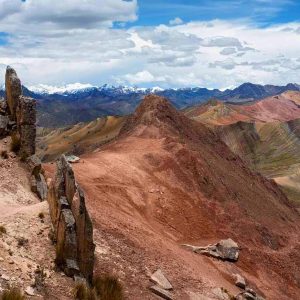
Reaching the ridge is incredibly rewarding. The colorful layers of Rainbow Mountain unfold in front of you, and the panoramic views make every step worth it.
How Long Each Section Takes (Cusipata Route)
Times vary with fitness and acclimatization, but here are average estimates:
- Trailhead to middle point: 25–40 minutes
- Middle point to the base of the final ascent: 30–45 minutes
- Final ascent to the viewpoint: 10–15 minutes
- Total ascent on foot: 1.5 to 2 hours
- Total ascent with a horse: 45 minutes to 1 hour (plus the final walk)
The descent usually takes much less time. The Pitumarca route has a shorter hike.
Difficulty Level for the Average Traveler
The difficulty comes from the altitude rather than the steepness. At sea level, most people would find this trail easy. Above 4,500 meters, the body reacts differently.
Most travelers describe the experience as:
- Physically moderate
- Altitude-intense
- Scenically impressive
- Highly memorable
Visitors who have not spent at least one full day acclimating in Cusco are more likely to struggle. Cold temperatures and strong winds also add to the challenge.
Who Should Consider Using a Horse?
Not everyone needs a horse, but it is a good idea for:
- Visitors who feel altitude symptoms early
- People with knee or back sensitivity
- Children who may tire quickly
- Older adults seeking a safer experience
- Travelers who simply want to save energy
- Anyone who wants to avoid physical strain at high altitude
Even strong hikers sometimes choose a horse so they can enjoy the experience instead of struggling through the climb.
What to Expect When Riding a Horse
Riding a horse at Rainbow Mountain is more rustic and authentic than a typical tourist ride. Saddles usually include wool blankets and leather straps, and handlers walk beside the horse to guide the way.
The pace is slow and steady, so you can breathe comfortably and enjoy the scenery. The horses are used to the terrain and to carrying visitors.
Dress warmly: temperatures can drop dramatically at this altitude. Gloves, a windproof jacket, and a warm hat make the ride much more comfortable.
Altitude Sickness: What You Should Know
Altitude sickness can affect anyone, regardless of fitness level. Symptoms may include:
- Headache
- Nausea
- Shortness of breath
- Lightheadedness
- Fatigue
If symptoms appear, a horse is a very practical way to continue without overexerting yourself. On the Cusipata route you can hire one partway up; on the Pitumarca route, consider booking it from the start if you are unsure. If symptoms become severe, stop climbing and descend.
Stay hydrated, take breaks, and listen to your body throughout the hike.
How to Get the Best Value for Your Horse Rental at Rainbow Mountain
Getting good value is not just about the lowest price. It’s about safety, comfort, and a smooth experience. These tips will help.
Know Which Route You’re Taking
Cusipata and Pitumarca have different prices and different rules. Ask your tour operator which route your tour uses before you go, so you know what to budget and whether you can hire a horse partway.
Ask About the Price Before Getting on the Horse
Always confirm the full fee, from the starting point to the drop-off point, before you get on. Ask whether the return trip is included or costs extra.
Book the Round Trip at the Start
Hiring partway up the Cusipata route is cheaper per section, but the round trip at the trailhead is the safest choice and the best value overall. On the Pitumarca route, it’s the only way to make sure you have a horse.
Carry Cash in Small Bills
Handlers accept only cash in soles, and change is often unavailable in such a remote place. Bring small bills and close to the exact amount.
Observe the Condition of the Horse
Value also means choosing a healthy horse and a responsible handler. Look for animals that appear well-fed, clean, and properly saddled. Ethical tourism supports local families while protecting the animals that work on the mountain every day.
Check the Distance Included in the Price
Not every rental covers the same distance. Before agreeing, ask exactly where the ride begins and ends. Remember that no horse goes up the final steep section to the viewpoint.
Know When a Horse Is Truly Necessary
Altitude affects everyone differently. If you are sensitive to altitude or arrived in Cusco only recently, renting a horse can save you energy and time. If you feel strong and acclimated on the Cusipata route, you can hike part of the trail first and decide later.
Trust Recommendations but Verify Details
Guides give helpful advice, but the final price is always arranged directly with the handler. Use your guide’s suggestions as a reference, then confirm the details yourself.
Negotiate Respectfully
Locals rely on this service for their livelihood. If you ask about flexibility, for example on a partial section, do it politely. A positive interaction leads to a fair agreement for both sides.
Frequently Asked Questions
How much does a horse cost at Rainbow Mountain in 2026?
On the Cusipata route, a horse costs S/ 100 (~US$29) round trip or S/ 80 (~US$23) uphill only. On the Pitumarca route, it costs S/ 80 (~US$23) round trip or S/ 60 (~US$17) uphill only.
Why are horse prices different on each route?
Each route is managed by a different local community, and each community sets its own rates. The Pitumarca route also has a shorter hike, so its prices are lower.
Can I hire a horse halfway up Rainbow Mountain?
Only on the Cusipata route. A horse from the halfway point costs about S/ 50 (~US$14.50), and the last stretch about S/ 20 (~US$6). On the Pitumarca route, horses use a separate trail, so you must hire one at the start.
Are there ATVs or quad bikes at Rainbow Mountain?
Yes, but only on the Pitumarca route, which offers ATVs and motorbikes as well as horses. The Cusipata route has horses only.
Do horses go all the way to the top of Rainbow Mountain?
No. Horses stop before the final steep section, and everyone walks the last 10 to 15 minutes to the viewpoint.
How do I pay for a horse at Rainbow Mountain?
In cash, in Peruvian soles, directly to the local handler. US dollars and cards are not accepted.
Is the horse included in Rainbow Mountain tours?
Usually not. Most group tours charge the horse separately. Tours that include a horse typically cost US$89 to US$165+ in total, depending on the route and whether the tour is group or private.
Closing Thoughts
Planning ahead is the best way to manage your budget at Rainbow Mountain. Know which route you’re taking, bring cash in soles, and agree on the price before you start. With the right preparation, the horse becomes a simple, affordable way to make sure you reach the viewpoint with energy to enjoy it.
Discover With Us
Your journey through Peru doesn’t end at Rainbow Mountain. We invite you to explore more destinations, hidden trails, and cultural experiences with us. Our mission is to guide travelers with practical tips, clear information, and inspiration for every step of their adventure.
Join our community and stay connected with real travel insights, stunning photography, and helpful updates for your next trip.
Follow us on Instagram: @visit.machupicchu