 English
 Spanish
 Portuguese
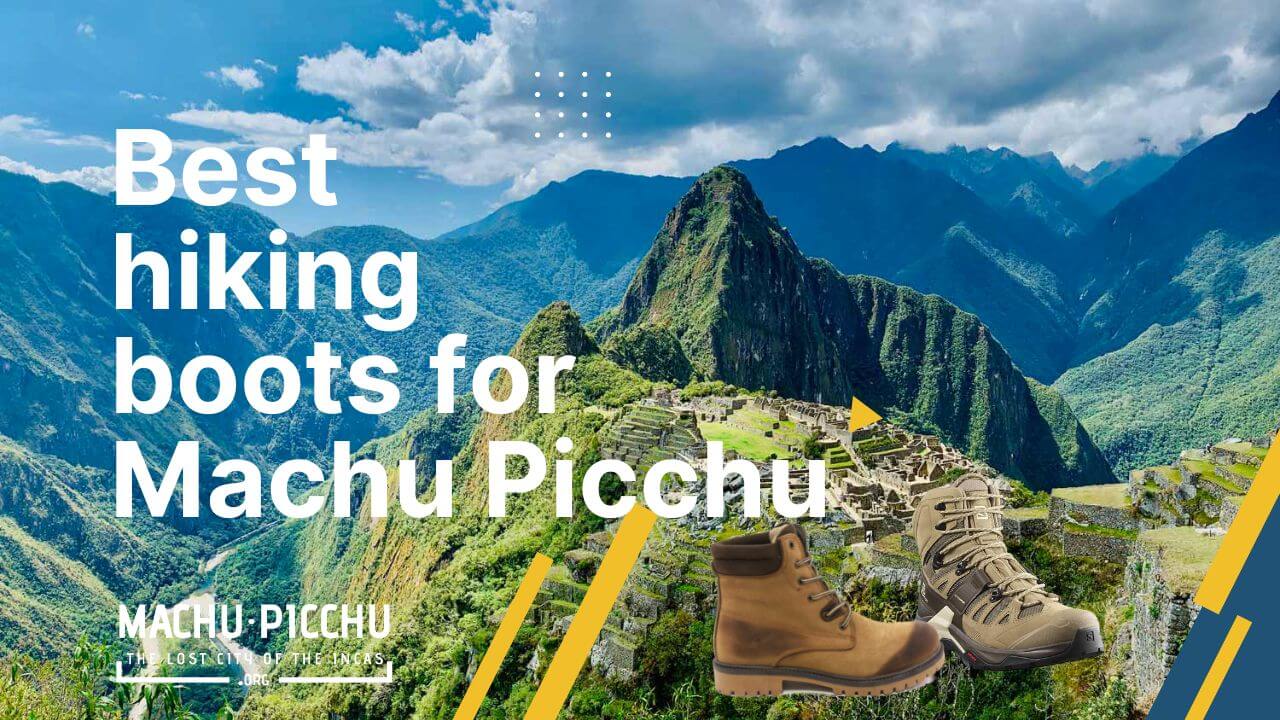

Choosing the right hiking boots for Machu Picchu or the Inca Trail is one of the most important gear decisions you’ll make before your trip. The wrong pair can turn the hike of a lifetime into a blister marathon — the right pair keeps you moving confidently across slippery granite steps, muddy switchbacks, and 13,800-foot mountain passes.
After trekking these trails extensively, our team has reviewed 7 of the best hiking boots for the Inca Trail and Machu Picchu, covering every budget and foot type. Whether you’re doing the classic 4-day Inca Trail or visiting Machu Picchu by train for a day hike, this guide tells you exactly what to wear — and what to skip.
Our top overall pick: The Salomon X Ultra 3 Mid GTX strikes the best balance of weight, waterproofing, and ankle support for the Inca Trail and Machu Picchu. For demanding 4-day treks with steep passes, step up to the Salomon Quest 4 GTX.
Quick picks: best hiking boots at a glance
| Category | Boot | Price | Weight |
|---|---|---|---|
| Best Overall | Salomon X Ultra 3 Mid GTX | ~$130 | 1 lb 15.7 oz |
| Best for 4-Day Inca Trail | Salomon Quest 4 GTX | ~$230 | 2 lb 14.2 oz |
| Best Budget | Merrell Moab 2 Mid WP | ~$100 | 2 lb 4 oz |
| Best Premium | Lowa Renegade GTX Mid | ~$245 | 2 lb 7 oz |
| Best Lightweight / Trail Runner | La Sportiva Ultra Raptor II Mid GTX | ~$175 | 2 lb 1.2 oz |
| Best for Technical Rocky Terrain | La Sportiva Nucleo High II GTX | ~$209 | 2 lb 1.6 oz |
| Best for Trekking Enthusiasts | Asolo Falcon GV | ~$250 | 2 lb 2.6 oz |
All affiliate links below go to Amazon (men’s and women’s versions where available).
What the Inca Trail actually does to your feet
Most hiking boot guides treat footwear as an abstract checklist. This one doesn’t. The Inca Trail is 26 miles of ancient stone steps, high-altitude passes, and near-constant moisture — and the terrain changes dramatically day by day.
Day-by-day trail conditions
Day 1 — Km 82 to Wayllabamba (7.5 miles, moderate): Mostly packed dirt and gentle gravel paths through the Sacred Valley. This is the easiest day. Lighter footwear handles it fine.
Day 2 — Wayllabamba to Pacaymayo (9 miles, very hard): This is the day that breaks underprepared hikers. The climb to Dead Woman’s Pass (4,215m / 13,828 ft) involves steep, loose rock. Your feet will swell at altitude — this is physiological, not a boot-fit problem, but it means a boot that felt perfect at sea level can suddenly feel tight. Maximum ankle support and a roomy toe box matter here.
Day 3 — Pacaymayo to Wiñay Wayna (10 miles, hard): Hundreds of ancient Inca stone steps going up and down, often wet and mossy. This is the most technically demanding day. A rigid sole prevents forefoot fatigue on the descents. Waterproofing is essential — mist and rain are common even in dry season.
Day 4 — Wiñay Wayna to Machu Picchu (3 miles, moderate): Predawn departure on dewy stone paths, then ruin exploration on cobblestone. By this point your feet are tired — cushioning matters. Many hikers switch to sandals or camp shoes once inside the ruins.
For Machu Picchu day visitors: You’re walking on polished stone and steep terraced paths, not backcountry trail. Ankle support and grip matter, but you don’t need a heavy backpacking boot. A lightweight mid-cut boot or a quality trail runner is ideal.
Wet season vs. dry season — how it changes your choice
Wet season (November–March): Waterproofing is non-negotiable. Deep lug patterns handle mud. Gaiters are highly recommended. Choose GORE-TEX over lighter proprietary membranes.
Dry season (April–October): Still rains on the Inca Trail — “dry season” is relative at altitude. Breathability becomes more important on warm days. Waterproofing is still recommended but doesn’t need to be your #1 priority.
Read more at: Best time to visit Machu Picchu and Best time to hike The Inca Trail.
The 6 features that matter most for Inca Trail hiking boots
1. Waterproofing. GORE-TEX is the industry benchmark — it’s more durable and breathable than most proprietary membranes. For wet season or a 4-day trek, don’t compromise here. For a dry-season day visit to Machu Picchu, a good DWR treatment may be sufficient.
2. Ankle support — mid-cut is the minimum. Low-cut trail runners are manageable in dry conditions for experienced hikers. For most people doing the 4-day Inca Trail, a mid-cut boot reduces ankle fatigue significantly on uneven Inca stone.
3. Sole rigidity and traction. Vibram soles dominate for good reason — they grip granite and stone reliably. A rigid shank protects your feet on hundreds of stone step descents on Day 3.
4. Weight. The Inca Trail has a strict weight limit for your pack. Every ounce on your feet matters. Lightweight boots in the 1 lb 15 oz – 2 lb 4 oz range are the sweet spot.
5. Break-in time. Start wearing your boots 6–8 weeks before departure. Minimum of 3–4 hikes of increasing length before the Inca Trail. Blisters from new boots at 13,000 feet are not a good time.
6. Altitude toe protection. At Dead Woman’s Pass, your feet swell. Buy boots that feel slightly roomy at sea level — approximately a half-size larger than your street shoe. Try them on at the end of the day when your feet are naturally at their largest.
The 7 best hiking boots for Machu Picchu and the Inca Trail, reviewed
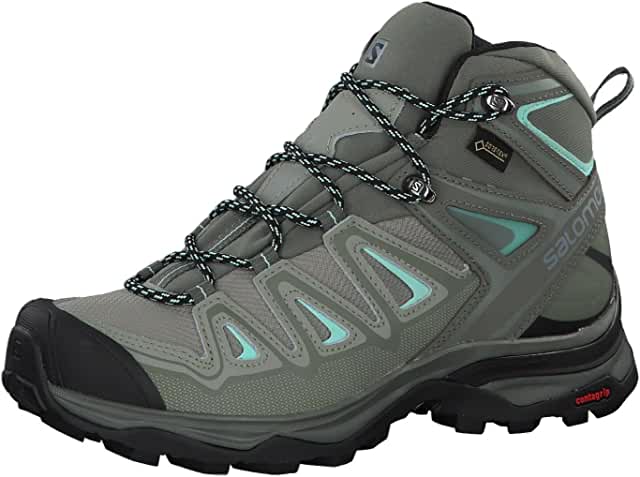
1. Salomon X Ultra 3 Mid GTX — Best Overall
Category: Lightweight | Weight: 1 lb 15.7 oz | Waterproof: Yes (GORE-TEX) | Price: ~$130
What we like: Fast, lightweight, flexible and excellent value.
What we don’t like: Thinner underfoot protection than the Quest 4; less stable under a heavy load.
Built like a trail running shoe with the ankle protection of a hiking boot, the Salomon X Ultra 3 Mid is our top pick for the Inca Trail and Machu Picchu. It handles the full range of conditions you’ll encounter — from the gentle Day 1 approach to the rocky stone stairways of Day 3 — without weighing you down.
The grip is exceptional. Salomon’s Contagrip outsole performs on wet granite and loose gravel, which covers about 80% of what you’ll face on the trail. The GORE-TEX lining keeps moisture out in light to moderate rain, and the lacing system locks your heel in place on descents without pressure points.
For Machu Picchu day visitors, this boot is arguably ideal: lightweight enough that you won’t feel it after hours of exploring the ruins, protective enough for the steep paths on Huayna Picchu or Machu Picchu Mountain.
The trade-off is underfoot protection. The X Ultra is noticeably more flexible than the Quest 4 below, and carries a lighter pack better than a heavy 20kg load. If you’re doing a 4-day trek in wet season with a full pack, consider stepping up to the Quest 4.
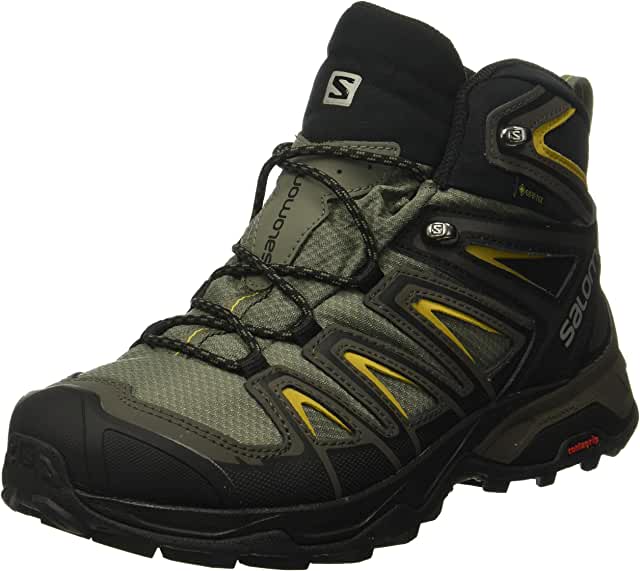
See the Salomon Men’s X Ultra 3 Mid GTX on Amazon
See the Salomon Women’s X Ultra 3 Mid GTX on Amazon
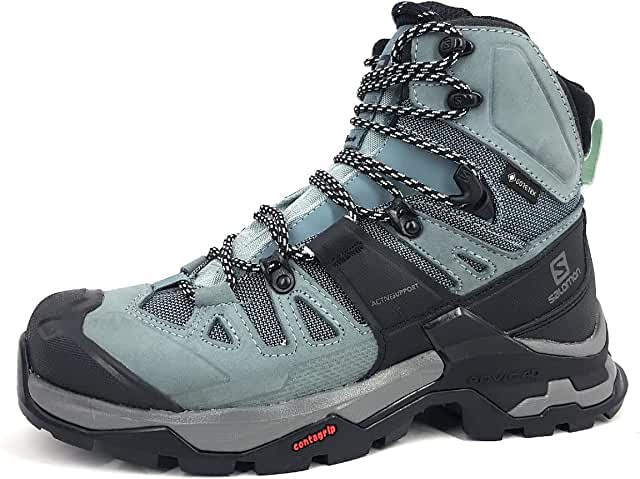
2. Salomon Quest 4 GTX — Best for the 4-Day Inca Trail
Category: Mid/heavy weight | Weight: 2 lb 14.2 oz | Waterproof: Yes (GORE-TEX) | Price: ~$230
What we like: Rugged, protective, exceptional heel lockdown.
What we don’t like: Heavy — overkill for day hikes or light loads.
If the classic 4-day Inca Trail is your goal and you want a boot that will handle anything the trail throws at you, the Quest 4 GTX is the complete package. The fourth-generation design features Salomon’s best lacing system: eyelets at the base of the ankle that lock your heel firmly in place on steep descents — exactly what you need on Day 3’s relentless stone staircases.
The underfoot protection is noticeably superior to lighter models. On the rocky approach to Dead Woman’s Pass, where loose stones shift underfoot at every step, the Quest’s stiff platform keeps you stable even with a loaded pack. The cushioning also impressed us on long-mileage days — this is a boot designed for the backcountry, and the Inca Trail qualifies.
The downside is weight. At just under 3 pounds per pair, the Quest is significant. For Machu Picchu day visitors or those doing lighter alternative treks like the 2-day Inca Trail, this boot is overkill. But for the full 4-day experience in wet season, it’s the most confidence-inspiring boot on this list.
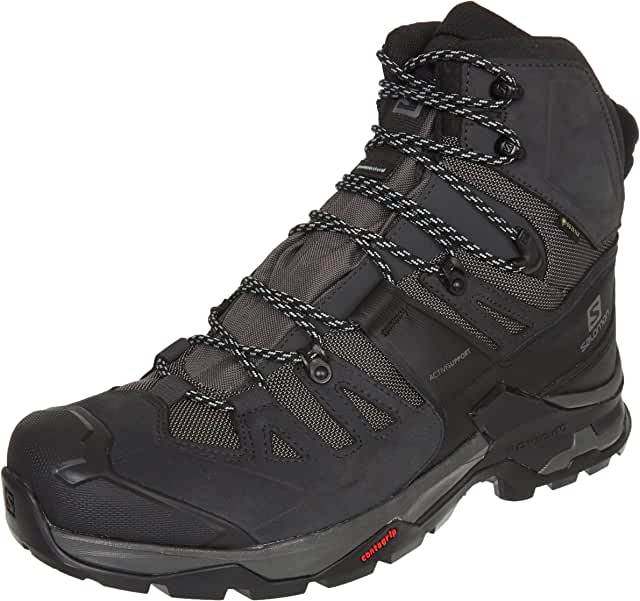
See the Salomon Men’s Quest 4 GTX on Amazon
See the Salomon Women’s Quest 4 GTX on Amazon
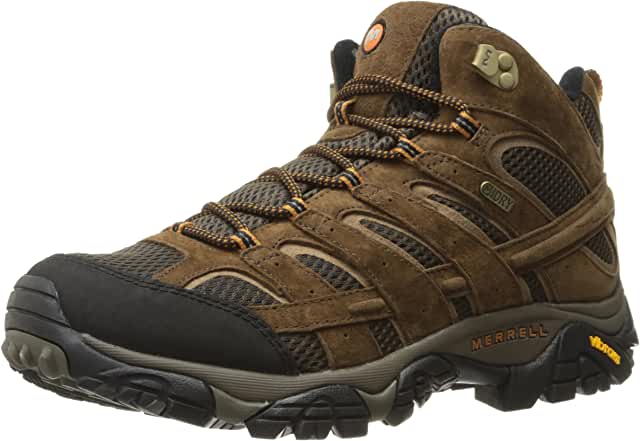
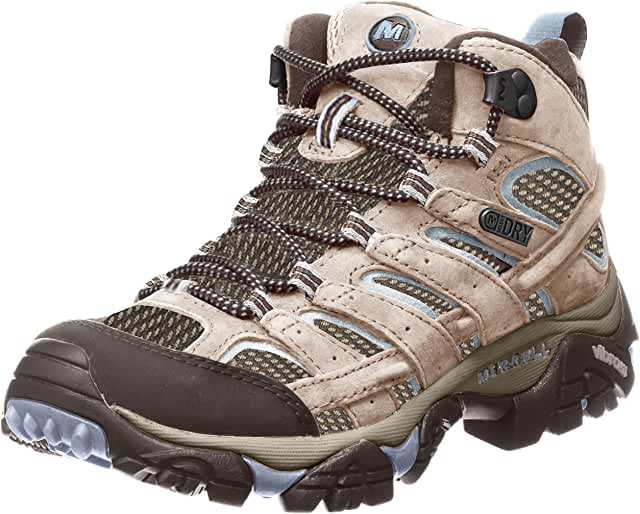
3. Merrell Moab 2 Mid Waterproof — Best Budget
Category: Lightweight/Midweight | Weight: 2 lb 4 oz | Waterproof: Yes (M Select DRY) | Price: ~$100
What we like: Excellent price-to-performance ratio, comfortable out of the box.
What we don’t like: Less support for heavy loads; not as durable as premium options.
The Moab 2 is one of the best-selling hiking boots in the world for a reason: it’s comfortable almost immediately, waterproof, and genuinely affordable. For the Inca Trail, it works well for hikers who travel light, stick to dry-season treks, and don’t need maximum protection on technical terrain.
The Vibram sole provides reliable grip on packed dirt and moderate rock. The M Select DRY membrane handles light rain and morning moisture well, though it’s not as robust as GORE-TEX for sustained wet conditions. Underfoot cushioning is solid for a boot in this price range.
The main limitations show on challenging terrain. The Moab 2 lacks the support of more expensive boots when carrying loads above 15kg, and the durability doesn’t match what you’d get from the La Sportiva or Lowa options. For hikers who plan to use the boot once and not again, this is a smart budget pick. For serious trekkers who will put 500+ miles on a pair, invest in something more durable.
The Gore-Tex version ($165) is worth the upgrade if you’re hiking in wet season.
See the Merrell Men’s Moab 2 Mid WP on Amazon
See the Merrell Women’s Moab 2 Mid WP on Amazon
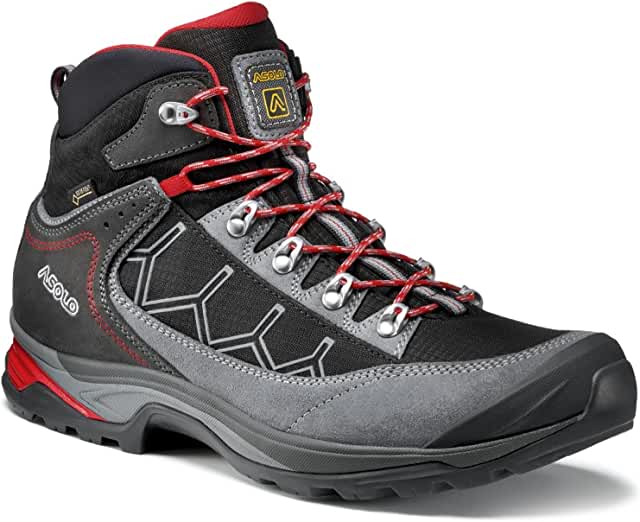
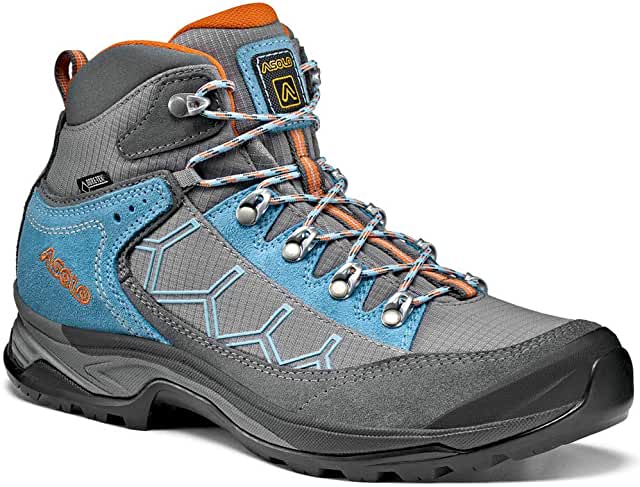
4. Asolo Falcon GV — Best for Trekking Enthusiasts
Category: Light/medium | Weight: 2 lb 2.6 oz | Waterproof: Yes (GORE-TEX) | Price: ~$250
What we like: Exceptional build quality, extremely comfortable, versatile across trek types.
What we don’t like: Expensive; moderate ankle stability.
Asolo is best known for mountaineering boots, but the Falcon GV shows where trekking footwear is heading: a sleeker, more modern design that gives up some of the weight of traditional hiking boots without sacrificing technical ability.
The Falcon GV shines on multi-destination Peru trips. If you’re combining the Inca Trail with Salkantay, Ausangate, or Rainbow Mountain, this boot transitions across all of them without compromise. The GORE-TEX lining is excellent, and the construction quality means these boots will outlast cheaper options by a considerable margin.
The stability is rated moderate — lower than a high-top mountaineering boot, but when laced tightly the Falcon handles steep rocky passes and heavy loads reliably. Hikers who prioritize stability above all else should look at the Quest 4 or Lowa Renegade instead. For everyone else, the Falcon GV is a premium option that earns its price over multiple years of serious trekking.
See the Asolo Men’s Falcon GV on Amazon
See the Asolo Women’s Falcon GV on Amazon
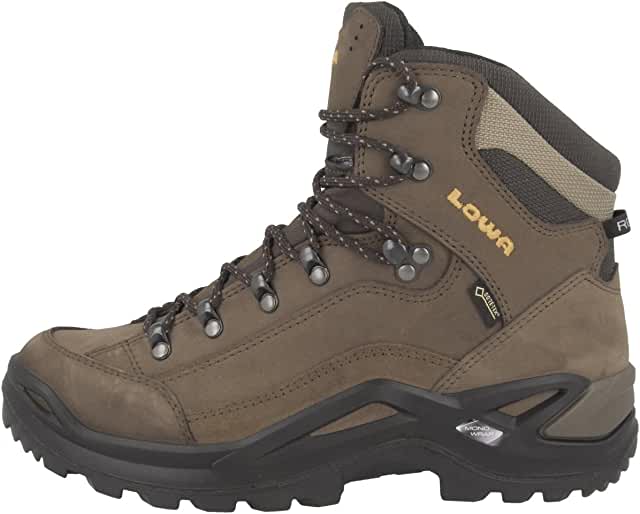
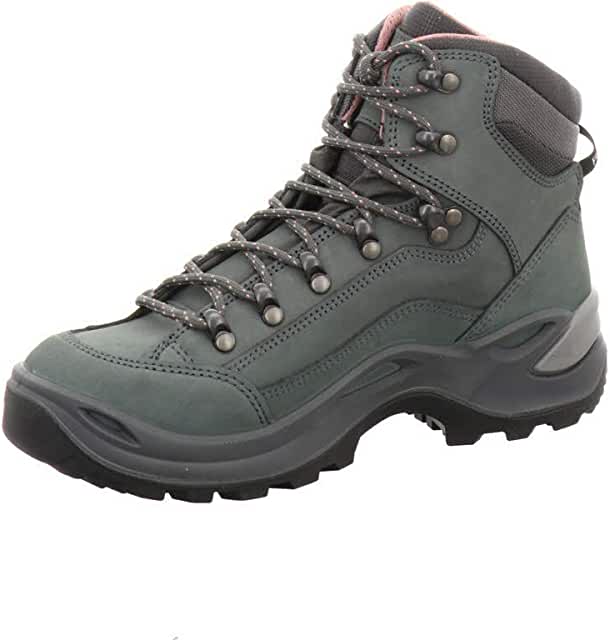
5. Lowa Renegade GTX Mid — Best Premium / Long-Term Investment
Category: Midweight | Weight: 2 lb 7 oz | Waterproof: Yes (GORE-TEX) | Price: ~$245
What we like: Traditional backpacking feel, excellent ground isolation, available in multiple widths.
What we don’t like: Durability concerns at high mileage; less aggressive grip pattern than competitors.
The Lowa Renegade has the look and feel of a traditional mountaineering boot but weighs under 2.5 pounds — an impressive engineering achievement. Where the Salomon Quest feels modern and aggressive, the Renegade feels planted and rugged, like a boot designed for someone who takes trails seriously.
The polyurethane external frame is a distinctive design choice: it takes on stabilization duties efficiently, meaning the leather upper can be thinner (faster break-in, reduced weight) without sacrificing support. The result is a boot that feels like a true backpacking boot from day one without the 3-week break-in period traditional leather boots require.
For the 4-day Inca Trail, the Renegade’s ground isolation and heel protection perform particularly well on Day 3’s stone descent to Wiñay Wayna. It’s also available in narrow, regular, and wide widths — a rare feature that makes it the best option for hikers who struggle to find boots that fit correctly.
The one honest weakness: high-mileage users report needing replacement annually. At $245, that adds up for frequent trekkers. For a once-in-a-lifetime Inca Trail trip, it’s an excellent choice.
See the Lowa Men’s Renegade GTX Mid on Amazon
See the Lowa Women’s Renegade GTX Mid on Amazon
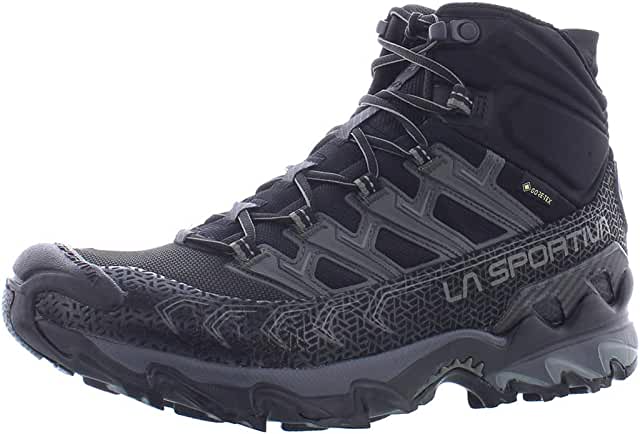
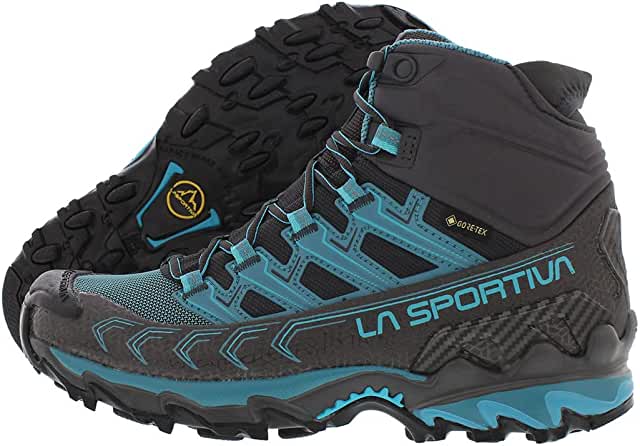
6. La Sportiva Ultra Raptor II Mid GTX — Best Lightweight / Trail Runner Hybrid
Category: Lightweight | Weight: 2 lb 1.2 oz | Waterproof: Yes (GORE-TEX) | Price: ~$175
What we like: Trail runner agility with hiking boot protection; FriXion sole grips exceptionally on rock.
What we don’t like: Shallow lugs struggle in mud; not ideal for heavy loads.
The Ultra Raptor Mid GTX sits in the hybrid category: more protection than a pure trail runner, lighter and more agile than a full hiking boot. It’s earned legendary status in the trail running community for its TPU heel, reinforced toe cap, and stiff shank — features that make it genuinely capable on technical terrain despite the trail-runner DNA.
On the Inca Trail, this boot performs particularly well on the rocky sections of Days 2 and 3. The FriXion XF 2.0 outsole is designed specifically to grip rock, which is exactly what ancient Inca stone provides. The GORE-TEX lining handles Inca Trail moisture levels comfortably.
The limitations are predictable: muddy conditions after heavy rain expose the shallow lug pattern’s weakness, and the boot isn’t designed for heavy pack loads. The Inca Trail’s 10kg pack limit plays in its favor here — you won’t be carrying enough weight to destabilize a boot with this level of lateral support.
For experienced hikers who want to move efficiently and hate heavy boots, this is the pick for the Inca Trail.
See the La Sportiva Men’s Ultra Raptor II Mid GTX on Amazon
See the La Sportiva Women’s Ultra Raptor II Mid GTX on Amazon
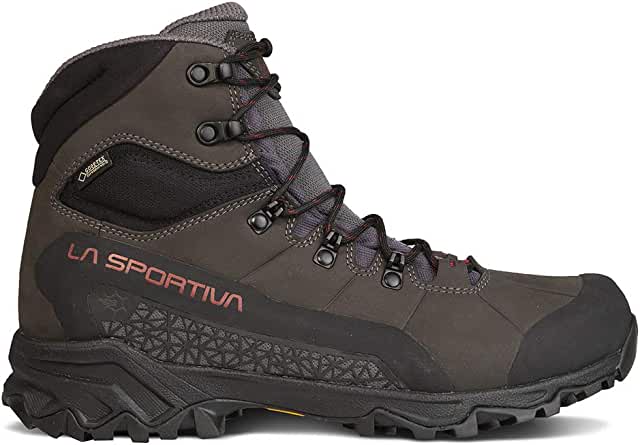
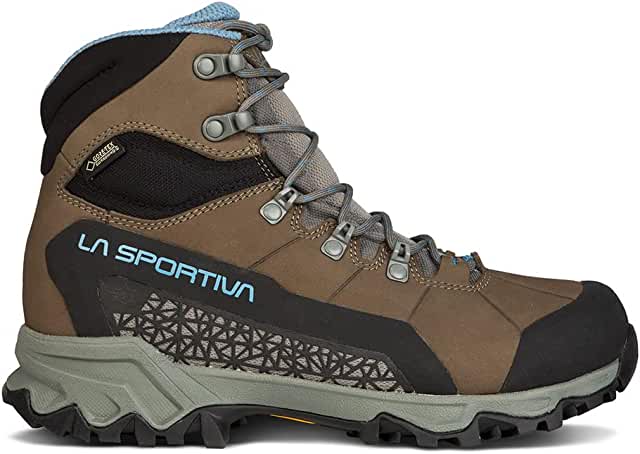
7. La Sportiva Nucleo High II GTX — Best for Technical Rocky Terrain
Category: Lightweight | Weight: 2 lb 1.6 oz | Waterproof: Yes (GORE-TEX Surround) | Price: ~$209
What we like: GORE-TEX Surround breathability is best-in-class; excellent on rock and mud.
What we don’t like: Slightly narrow fit (though wide sizes are available).
The Nucleo High II GTX stands out in one specific area: breathability. Where most waterproof boots breathe only through the top of the foot, the GORE-TEX Surround lining breathes through the top, the sides, and — uniquely — the bottom of the footbed. For long hot days on the Inca Trail approach, this is a meaningful comfort upgrade.
The durability is also exceptional for a 2-pound boot. Large leather reinforcements replace mesh in high-wear zones, which extends the lifespan significantly compared to mesh-heavy lightweight options. Traction on rock and mud is excellent — better than the Ultra Raptor in wet conditions, which makes this the right choice for wet season trekkers who still want a lightweight feel.
It’s an excellent upgrade over the Merrell Moab for hikers who are serious about their footwear and plan to use these boots beyond just Machu Picchu — for Rainbow Mountain, Salkantay, Ausangate, or other Peru treks where technical terrain and moisture are constants.
See the La Sportiva Men’s Nucleo High II GTX on Amazon
See the La Sportiva Women’s Nucleo High II GTX on Amazon
Hiking boots vs. trail runners on the Inca Trail — the honest answer
This question comes up constantly on TripAdvisor forums, and the answer is more nuanced than most guides admit.
Trail runners are acceptable if: you’re hiking in dry season (April–October), you’re an experienced hiker with strong ankles, and you’re traveling light (under 10kg). The Inca Trail’s weight limit actually works in trail runners’ favor here.
Mid-cut hiking boots are strongly recommended if: you’re hiking in wet season (November–March), this is your first major multi-day trek, you’ve had ankle issues in the past, or you’ll be hiking in rain. The stone steps on Day 3 become genuinely hazardous when wet — ankle support is not optional.
| Factor | Hiking Boots | Trail Runners |
|---|---|---|
| Dead Woman’s Pass ascent | ✅ Better ankle support | ⚠️ Manageable for experienced hikers |
| Stone step descents (Day 3) | ✅ Rigid sole = less fatigue | ⚠️ More demanding on feet |
| Wet season mud | ✅ Deeper lugs, better GTX | ❌ Shallow lugs struggle |
| Weight on feet | ⚠️ Heavier | ✅ Lighter |
| Dry season day visit | ⚠️ Overkill | ✅ Ideal |
| Comfort at Machu Picchu ruins | ⚠️ Heavier for walking | ✅ More comfortable |
Our verdict: For the classic 4-day Inca Trail, choose a mid-cut hiking boot. For Machu Picchu day visits in dry season, a quality trail runner or the La Sportiva Ultra Raptor hybrid is the right call.
The two-pair strategy every Inca Trail hiker needs
Every experienced Inca Trail trekker brings a second pair of footwear. Here’s why and what to bring.
Camp shoes: non-negotiable
After 8–10 hours of hiking, your feet need to air out. Keeping them locked in sweaty boots accelerates blister development and makes for a miserable evening at camp. A lightweight pair of sandals or packable camp shoes weighs around 200–400g and makes a real quality-of-life difference.
Good options: Teva Original Universal sandals (~180g), Keen Newport H2 sandals, or lightweight packable flip-flops. The Teva is the most popular choice among Inca Trail guides — it handles camp, the hot springs at Aguas Calientes, and exploring the Machu Picchu ruins on Day 4.
Hiking socks: your most important gear purchase after boots
More blisters on the Inca Trail come from bad socks than bad boots. Rules:
- Merino wool or synthetic only. Never cotton — it retains moisture and causes friction.
- Bring 4 pairs minimum on a 4-day trek. Rotate daily.
- Consider a thin liner sock inside your hiking sock to reduce friction on long days.
- Top picks: Darn Tough Hiker Mid Weight (merino, virtually indestructible warranty) and Smartwool Hike Classic Edition (lighter weight, excellent for warm conditions).
Practical buying guide for US hikers
Where to buy
REI is the best option for most US buyers: expert fitting staff, an extremely generous return policy, and members earn a dividend on every purchase. If you’re unsure of your size or need to compare fits, go in person.
Amazon has the widest selection and fastest shipping. All links in this article go to Amazon with both men’s and women’s versions. Prime shipping means you can order 2 weeks before departure and still be fine.
Do not buy hiking boots in Cusco. Counterfeit gear is common in South American markets, and even legitimate local stock is often limited. Buy before you leave the US.
Sizing for altitude — the half-size rule
This is the advice most guides skip: buy your Inca Trail boots half a size larger than your normal shoe size. Feet swell measurably at altitude (especially above 13,000 feet), and they swell further over long hiking days regardless of elevation. A boot that fits perfectly in a store at sea level in the morning can feel like a vice at Dead Woman’s Pass in the afternoon.
When trying boots on, do it at the end of the day when your feet are naturally at their largest. Wear the hiking socks you’ll use on the trail. Make sure there’s enough room to wiggle your toes — your foot slides forward on descents, and toe-box pressure is the leading cause of black toenails on multi-day hikes.
Break-in timeline
6–8 weeks before departure: Start wearing the boots on neighborhood walks, errands, and short hikes.
4–5 weeks out: First proper trail hike, 3–5 miles.
2–3 weeks out: Long hike, 8–10 miles with elevation gain.
Final week: Light activity only — let your feet recover.
Do not attempt the Inca Trail in boots you’ve worn fewer than 3 times.
Full comparison table
| Boot | Price | Category | Weight | Waterproof | Upper |
|---|---|---|---|---|---|
| Salomon X Ultra 3 Mid GTX | $130 | Lightweight | 1 lb 15.7 oz | GORE-TEX | Leather/textile |
| Salomon Quest 4 GTX | $230 | Mid/heavy | 2 lb 14.2 oz | GORE-TEX | Leather/textile |
| Merrell Moab 2 Mid WP | $100 | Light/mid | 2 lb 4 oz | M Select DRY | Leather/mesh |
| Asolo Falcon GV | $250 | Light/mid | 2 lb 2.6 oz | GORE-TEX | Suede/polyester |
| Lowa Renegade GTX Mid | $245 | Midweight | 2 lb 7 oz | GORE-TEX | Nubuck leather |
| La Sportiva Ultra Raptor II Mid GTX | $175 | Lightweight | 2 lb 1.2 oz | GORE-TEX | Synthetic |
| La Sportiva Nucleo High II GTX | $209 | Lightweight | 2 lb 1.6 oz | GORE-TEX Surround | Nubuck leather |
Frequently asked questions
Do I need hiking boots for Machu Picchu?
It depends on how you’re visiting. If you’re arriving by train and spending a few hours walking the ruins on polished stone paths, good-quality trail runners or sturdy sneakers with grip are sufficient. If you’re hiking up from Aguas Calientes (a 90-minute uphill trail), or climbing Huayna Picchu or Machu Picchu Mountain, mid-cut hiking boots with ankle support and waterproofing are recommended — particularly during wet season.
What shoes should I wear on the Inca Trail?
Mid-cut waterproof hiking boots are the standard recommendation for the 4-day Classic Inca Trail. The trail includes steep rocky ascents to 4,215m, slippery stone descents, and frequent rain. Our top picks are the Salomon X Ultra 3 Mid GTX (best overall) and the Salomon Quest 4 GTX (best for demanding conditions).
Can I hike the Inca Trail in sneakers or trainers?
Technically possible in dry season with a light pack, but not recommended. The Inca Trail includes loose rocks, wet stone stairs, and significant elevation gain. Regular sneakers lack the ankle support, grip, and waterproofing needed for safe, comfortable trekking. Rangers at the trailhead may also comment on inappropriate footwear.
Are waterproof boots necessary for the Inca Trail?
Yes, in almost all cases. Even in “dry season” (April–October), cloud forest sections of the Inca Trail receive moisture daily. Full wet season (November–March) involves sustained rain and mud. GORE-TEX or equivalent waterproof membranes are standard equipment for this trail.
Should I bring two pairs of shoes for the Inca Trail?
Yes — bring your hiking boots for the trail and a lightweight pair of camp sandals (Teva or similar) for evenings at camp, the Aguas Calientes hot springs, and exploring Machu Picchu on Day 4 when your feet are tired. The weight penalty is minimal and the comfort benefit is significant.
How far in advance should I break in hiking boots?
6–8 weeks before your Inca Trail departure. Complete at minimum 3–4 hikes of increasing distance before the trek, including at least one long day with elevation gain.
What about gaiters for the Inca Trail?
Gaiters are useful but not essential. In wet season, lightweight trail gaiters (not mountaineering gaiters) keep mud and debris out of your boots on the approach trails and prevent wet socks on dew-covered vegetation. In dry season, they’re optional. Most experienced Inca Trail hikers bring a lightweight pair for wet season and skip them in dry season.
Final verdict
All 7 boots above are proven performers on the Inca Trail and Machu Picchu. The right choice depends on your trip type:
- 4-day Inca Trail in wet season: Salomon Quest 4 GTX or Lowa Renegade GTX Mid
- 4-day Inca Trail in dry season: Salomon X Ultra 3 Mid GTX or La Sportiva Ultra Raptor II Mid GTX
- Machu Picchu day visit: Salomon X Ultra 3 Mid GTX or Merrell Moab 2 Mid WP
- Multi-trek Peru itinerary: Asolo Falcon GV or La Sportiva Nucleo High II GTX
- Budget-conscious first-timer: Merrell Moab 2 Mid WP
Any of these boots will also serve you well on other Cusco-area treks: Salkantay, Lares, Ausangate, and Rainbow Mountain all involve similar terrain and weather conditions.
Note: This guide is based on our team’s direct trekking experience on the Inca Trail and Machu Picchu trails, combined with input from thousands of hiker reviews worldwide. All Amazon links are affiliate links — purchases through them help support this site at no cost to you.
Related articles: