 English
 Spanish
 Portuguese

High in the Peruvian Andes, hidden among clouds and mountains, stand two of the greatest achievements of Inca civilization. The debate of choquequirao vs machu picchu reveals not just two destinations, but two ways of experiencing the legacy of the Incas. While Machu Picchu shines as one of the New Seven Wonders of the World, attracting millions each year, Choquequirao remains its mysterious twin—remote, untamed, and astonishingly preserved.
Many travelers planning a journey to the Andes ask the same question: Which site should I visit—Choquequirao or Machu Picchu? The debate between choquequirao vs machu picchu reveals two very different experiences that share the same spirit of awe and discovery.
In this complete guide, we’ll explore their differences in history, architecture, location, trekking routes, difficulty, tourism impact, and spiritual atmosphere—so you can decide which one resonates most with your traveler’s soul.
The Legacy of the Incas, A Civilization Written in Stone

Before comparing choquequirao vs machu picchu, it’s essential to understand the context that unites them. Both cities were part of the Inca Empire’s vast network of roads, temples, and agricultural terraces that connected the highlands with the jungles of the Amazon.
The Incas didn’t just build cities; they created sacred landscapes designed to harmonize with the mountains, rivers, and stars. Each citadel represented both political power and spiritual devotion.
Machu Picchu and Choquequirao were not random constructions—they were sanctuaries of knowledge, astronomy, and ceremony. Their locations weren’t chosen for convenience but for cosmic alignment, facing sacred peaks that the Incas revered as apus, or mountain deities.
To walk through either site is to step into a world where architecture becomes prayer and stone becomes memory.
Origins and Discovery

Machu Picchu was built in the 15th century, during the reign of Emperor Pachacútec, and later abandoned after the Spanish conquest. For centuries, it remained hidden from the outside world until Hiram Bingham rediscovered it in 1911, bringing global attention to its majesty. Since then, it has become a symbol of Peru and one of the world’s most visited archaeological sites.
Choquequirao, whose name means “Cradle of Gold” in Quechua, was also constructed around the same period, likely under Pachacútec or his successors. However, unlike Machu Picchu, it wasn’t fully rediscovered until the late 18th century, and even today, only about 40% of the site has been excavated.
Because of its isolation and the strenuous journey required to reach it, Choquequirao remains one of Peru’s last true hidden gems—a place where you can experience the raw essence of the Inca world, untouched by mass tourism.
When comparing choquequirao vs machu picchu, it’s as if you’re comparing two chapters of the same story: one revealed to the world, the other still whispering its secrets.
Architecture and Design, The Genius of the Incas

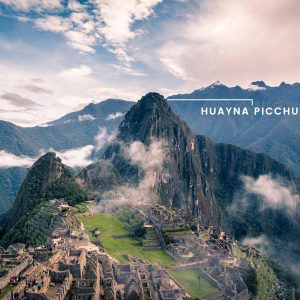
Machu Picchu dazzles visitors with its perfection. Its urban layout is divided into agricultural and residential sectors, temples aligned with astronomical points, and finely carved stone walls fitted so precisely that not even a blade of grass fits between them. Key structures like the Temple of the Sun, Intihuatana, and Temple of the Three Windows reveal the Inca’s mastery of geometry, astronomy, and sacred symbolism.
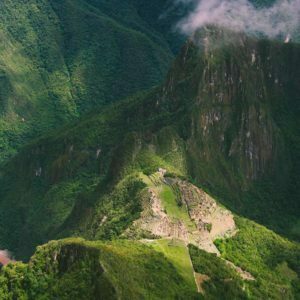
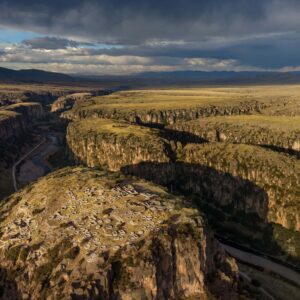
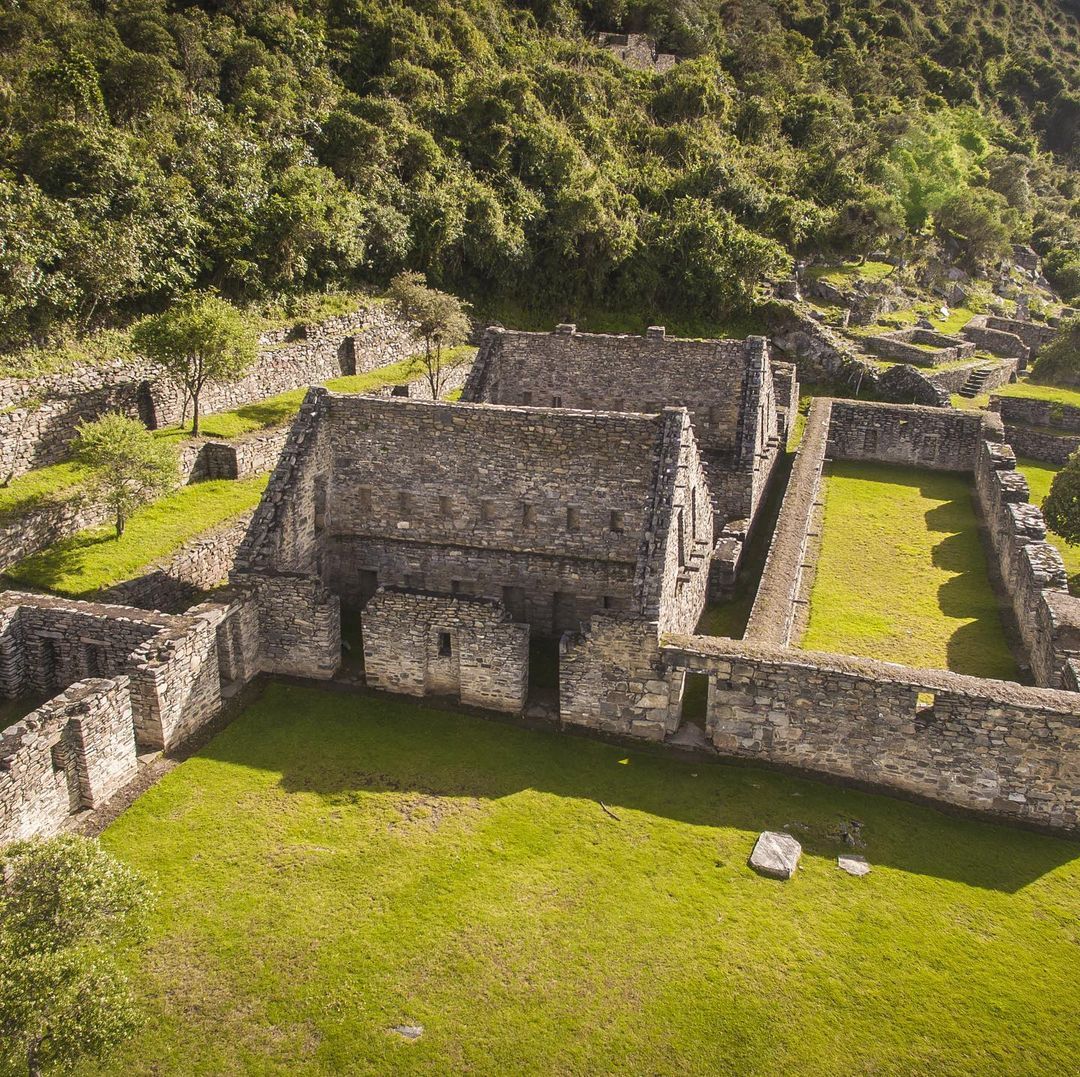
Choquequirao, by contrast, feels wilder and more monumental in spirit. Perched on a ridge at 3,050 meters above sea level, it covers nearly six times the area of Machu Picchu, though much of it remains buried under forest. Its terraces descend dramatically into the Apurímac Canyon, one of the deepest in the world. Many walls still bear white llama figures—stone mosaics that seem to move along the slopes, symbolizing life and fertility.
If Machu Picchu is a refined masterpiece, Choquequirao is a grand unfinished symphony. Its power lies in its vastness and solitude, where every step feels like an archaeological discovery.
Location and Accessibility
Geographically, both citadels are in the Cusco region, but their accessibility is dramatically different.
Machu Picchu can be reached relatively easily. Most travelers take a train from Cusco or Ollantaytambo to Aguas Calientes, followed by a short bus ride or hike to the entrance. Those seeking adventure opt for the famous Inca Trail, the Salkantay Trek, or other multi-day routes that end at the citadel.

Choquequirao, on the other hand, demands effort and endurance. It’s located in the Vilcabamba mountain range, near the town of Cachora. Reaching it involves a challenging 2-day trek (each way), descending deep into the Apurímac Canyon and climbing back up through steep, hot terrain. There are no trains, no buses, and no luxury hotels at the summit—only silence, mountains, and the sound of the wind.

This contrast defines much of the choquequirao vs machu picchu comparison: convenience versus challenge, accessibility versus isolation. Where Machu Picchu welcomes millions, Choquequirao rewards the few who are willing to earn its view through sweat and perseverance.
Trekking Experience, Pilgrimage and Adventure


Visiting Machu Picchu often involves a blend of comfort and cultural immersion. You can hike the classic 4-day Inca Trail or choose alternative routes like Lares or Salkantay, each offering spectacular scenery and well-organized tours. Porters, chefs, and campsites make the journey manageable and enjoyable.
Reaching Choquequirao, however, is a test of endurance and spirit. The round-trip trek covers around 60 kilometers (37 miles) and demands two days down and two days up, often under the Andean sun. The trail isn’t easy—it’s steep, dusty, and at times unforgiving—but it’s also deeply rewarding.
Unlike the crowded paths leading to Machu Picchu, Choquequirao’s trail is quiet, and you’ll often find yourself completely alone among towering peaks and condors gliding above. It’s a pilgrimage for those who seek solitude, authenticity, and connection rather than comfort.
In the journey of choquequirao vs machu picchu, the trek itself defines who you are as a traveler: do you seek the wonder of discovery or the peace of being away from it all?
Cultural and Spiritual Atmosphere
Both sites radiate an undeniable sacred energy, but in very different ways.
At Machu Picchu, the atmosphere is awe-inspiring yet lively. You share the experience with hundreds of visitors, guides, and photographers. The citadel hums with admiration and human presence, a living museum of Inca brilliance.
Choquequirao feels profoundly spiritual in its solitude. When the mist lifts in the early morning and sunlight paints the terraces golden, the silence speaks louder than words. Here, you can meditate, listen to the wind, and feel the pulse of the Andes as the Incas might have centuries ago.
In many ways, choquequirao vs machu picchu mirrors two spiritual dimensions: Machu Picchu symbolizes celebration and revelation; Choquequirao embodies reflection and endurance. Both awaken something ancient within the traveler—the sense that we are walking where gods once walked.
Tourism and Preservation
Machu Picchu is one of the most visited archaeological sites on Earth, welcoming nearly 1.5 million tourists every year. Its popularity, while essential to Peru’s economy, has also brought challenges—erosion, environmental pressure, and the need for strict visitor regulations. The Peruvian government now controls daily entries and divides access between different circuits to protect the fragile stonework and terraces.
Choquequirao, in contrast, sees fewer than 20,000 visitors per year. Its isolation acts as a natural protector, preserving the site’s authenticity. The ruins remain in semi-wild condition, surrounded by thick vegetation and rugged landscapes. You won’t find ticket lines, crowds, or camera flashes—just ancient stones and the sound of nature.
However, as infrastructure projects advance, including a future cable car proposal to increase accessibility, the balance between preservation and promotion will become critical. Experts and local communities are working to ensure that Choquequirao develops sustainably, learning from the successes and challenges faced by Machu Picchu.
Thus, in the ongoing story of choquequirao vs machu picchu, one represents global fame, while the other embodies untouched authenticity. Together, they remind us that conservation is as sacred as discovery.
Infrastructure and Accessibility

Machu Picchu offers all the comforts of modern tourism. The nearby town of Aguas Calientes (Machu Picchu Pueblo) provides hotels, restaurants, cafés, and spas. Trains from Cusco or Ollantaytambo make the journey smooth and scenic, with options ranging from economical to luxurious. Visitors can reach the citadel by bus or on foot via the final stretch of the Inca Trail.
Choquequirao, on the other hand, is for the true explorer. There are no direct transport routes—only trekking trails. The most common starting point is San Pedro de Cachora, about a four-hour drive from Cusco. From there, hikers descend into the Apurímac Canyon, cross the river, and climb again toward the ruins. Basic campsites provide minimal services, and local muleteers assist with carrying supplies.
While Machu Picchu offers accessibility and comfort, Choquequirao rewards endurance and adventure. The contrast reflects two sides of the Andean experience—one shaped for visitors, the other preserved for seekers.
Choosing between choquequirao vs machu picchu often depends on what kind of journey you want: a cultural marvel within reach, or a sacred challenge that tests your limits.
Best Time to Visit
Both Choquequirao and Machu Picchu share similar weather patterns, shaped by the Andean highlands and cloud forests.
The dry season, from April to October, offers the best trekking conditions—clear skies, stable temperatures, and breathtaking visibility. June to August is peak season, especially for Machu Picchu, with higher visitor numbers and limited ticket availability.
The rainy season, from November to March, brings lush green scenery but also slippery trails and heavy rainfall. For Machu Picchu, light rain isn’t a problem since transportation and access remain open. For Choquequirao, however, rain can make the trek significantly harder due to mud and river crossings.
For photography, the months of May and September are ideal—vibrant landscapes, pleasant temperatures, and fewer tourists.
So, when planning your trip, the best approach is simple: Machu Picchu welcomes you almost year-round, while Choquequirao rewards those who brave its path during clear, dry months.
Cost Comparison
In the debate of choquequirao vs machu picchu, cost plays an important role—both in logistics and experience.
Visiting Machu Picchu involves several expenses: train tickets, bus rides, entry fees, and guided tours. On average, a full trip costs between $250 and $500 USD, depending on whether you travel independently or with a tour operator. Luxury packages can easily exceed $700, especially if you choose the Hiram Bingham train or stay in high-end lodges.
In contrast, Choquequirao requires minimal entry fees (around $20 USD) but involves higher physical effort and fewer comfort options. Multi-day treks with guides and muleteers range between $400 and $700 USD, covering food, equipment, and camping.
Interestingly, while Machu Picchu’s experience costs more in money, Choquequirao’s price is measured in endurance. The effort itself becomes the currency of discovery.
For budget-conscious travelers who crave solitude and authenticity, Choquequirao offers an unmatched return on investment—a priceless journey earned through sweat and willpower.
Visitor Experience and Atmosphere
The atmosphere at Machu Picchu is electric. As soon as you enter the site and see the citadel framed by Huayna Picchu, a collective sense of wonder fills the air. You’ll hear guides narrating stories, tourists snapping photos, and birds gliding across the peaks. It’s magical, but it’s also busy. The energy comes from people sharing a once-in-a-lifetime moment together.
At Choquequirao, the feeling is entirely different. Silence dominates. You may hike for hours without meeting anyone. When you finally reach the terraces, the solitude is almost overwhelming. The only sound might be the rustle of the wind through the grass or the cry of a condor soaring above.
If Machu Picchu offers shared awe, Choquequirao offers personal revelation. The choice depends on your soul as a traveler—do you want to witness human wonder, or feel part of nature’s sacred quiet?
Symbolism and Spiritual Connection
Machu Picchu’s architecture and alignment were designed around the Sun, the stars, and the mountains. Its temples honor Inti (the Sun God), and every stone placement follows astronomical logic. During solstices, sunlight enters through precise windows, connecting the heavens and the earth.
Choquequirao, too, holds deep spiritual significance. Its terraces and ceremonial platforms face the sacred Apurímac River, believed by the Incas to be a representation of the Milky Way on Earth. The site’s design reflects duality—a fundamental Inca concept—where upper and lower worlds coexist in harmony.
While Machu Picchu celebrates cosmic order and perfection, Choquequirao embodies balance and transformation. Visiting both reveals the philosophical depth of Inca cosmology—one rooted in respect for nature, cycles, and the eternal dialogue between man and the universe.
Comparative Summary Table
| Feature | Machu Picchu | Choquequirao |
|---|---|---|
| Elevation | 2,430 m (7,970 ft) | 3,050 m (10,006 ft) |
| Visitors per Year | ~1.5 million | < 20,000 |
| Access | Train, bus, or Inca Trail | 4-day round-trip trek |
| Entry Fee | ~$45 USD | ~$20 USD |
| Trekking Difficulty | Moderate | Challenging |
| Infrastructure | Hotels, restaurants, buses | Campsites, basic services |
| Time to Visit | 1–2 days | 4–5 days |
| Vibe | Iconic, social, vibrant | Remote, silent, spiritual |
| Best For | First-time visitors, families | Adventurers, explorers |
| UNESCO Status | World Heritage Site | Candidate for future recognition |
This comparison makes it clear: choquequirao vs machu picchu isn’t about which is better, but which resonates more with your purpose as a traveler.
Which One Should You Choose?
Deciding between choquequirao vs machu picchu ultimately depends on the kind of experience you seek.
If your dream is to witness the perfection of Inca engineering and the grandeur of an icon known across the world, Machu Picchu is the clear choice. Its accessibility, facilities, and cultural energy make it ideal for first-time visitors, families, and travelers looking for a comfortable yet awe-inspiring experience.
But if your heart longs for solitude, raw adventure, and a sense of timeless discovery, Choquequirao will call to you. The journey is long, the path is steep, but every step rewards you with silence, mystery, and authenticity. Here, you’ll feel like an explorer rather than a tourist—a rare privilege in today’s world.
In truth, both cities complement each other. Machu Picchu shows what the Incas achieved; Choquequirao shows what they left hidden. One is the masterpiece unveiled, the other the secret still being told.
Sustainability and Future Preservation
Both sites are mirrors reflecting the challenges of preserving heritage in a modern world.
Machu Picchu’s immense popularity has forced Peru to create strict sustainability measures: limiting daily entries, establishing walking circuits, and promoting alternative routes like Salkantay and Lares to reduce impact. Continuous conservation projects ensure the terraces and temples remain intact despite the heavy flow of visitors.
Choquequirao, in contrast, faces a different challenge: invisibility. Its remote location protects it from mass tourism, but also limits funding for excavation and preservation. Only about 40% of its structures have been unearthed, and much remains hidden beneath dense forest.
Plans for a cable car connecting the Apurímac Canyon to Choquequirao have sparked debate. Supporters say it would make the site more accessible and economically beneficial for local communities. Critics fear it could disrupt the fragile balance that gives Choquequirao its magic—its silence and isolation.
The future of both places depends on balance: opening doors without erasing the mystery, sharing heritage without consuming it. In this sense, the question of choquequirao vs machu picchu becomes less about choice and more about responsibility.
Emotional and Spiritual Connection
Traveling through the Andes changes the traveler in ways words can barely describe.
At Machu Picchu, the feeling comes from witnessing perfection—the divine geometry of stone and sky, the echo of civilization reaching eternity.
At Choquequirao, the feeling comes from effort and silence. The journey humbles you, strips away noise, and connects you to something pure and ancient.
Both sites awaken the same realization: the Incas built not just with stone, but with vision and faith. To walk these paths is to participate in that sacred continuity.
Between choquequirao vs machu picchu, there is no winner. There is only the one that speaks to your spirit. And sometimes, the truest answer is to visit both—one for the wonder, one for the soul.
Frequently Asked Questions
1. Is Choquequirao older than Machu Picchu?
Both were built around the same era (15th century), during the reign of Pachacútec or his successors.
2. How long does it take to reach Choquequirao?
The round trip takes 4 to 5 days, with two days to reach the site and two to return.
3. Is Choquequirao harder to hike than Machu Picchu?
Yes. The trek is physically demanding, involving steep ascents and descents, and requires good fitness.
4. Which site receives more tourists?
Machu Picchu welcomes around 1.5 million visitors per year; Choquequirao fewer than 20,000.
5. Can both be visited in one trip?
Yes, adventurous travelers often combine both in a longer expedition through Cusco and the Vilcabamba range.
6. Do both require entrance tickets?
Yes, Machu Picchu has multiple ticket types; Choquequirao’s entry is simpler and much cheaper.
7. What’s the altitude difference?
Machu Picchu sits at 2,430 m; Choquequirao at 3,050 m, making it slightly higher and cooler.
8. Are guides necessary?
Guides are recommended for both. At Choquequirao, they are essential for navigation and local context.
9. Which is better for photography?
Machu Picchu for iconic vistas; Choquequirao for solitude and dramatic landscapes.
10. Is Choquequirao being excavated further?
Yes, ongoing archaeological projects continue to uncover new sectors every year.
Final Thoughts: The Call of Two Lost Cities
The story of choquequirao vs machu picchu is the story of duality—the visible and the hidden, the celebrated and the silent.
Together, they represent the two faces of the Inca legacy: mastery and mystery.
Machu Picchu reveals the brilliance of an empire that reached the sky. Choquequirao reminds us that not all greatness seeks to be seen.
Visiting either one—or both—is not just a journey through history, but an encounter with your own sense of wonder. The Andes don’t ask you to choose; they invite you to listen. Each path, each sunrise, and each stone holds a message waiting to be understood.
Whichever you choose, remember: the real treasure of the Incas was not gold—it was harmony, endurance, and reverence for the land.
Discover With Us
There are journeys that change how you see the world—and others that change how you see yourself.
Exploring the sacred cities of the Andes means tracing the heartbeat of a civilization that still whispers through mountains and rivers.
Whether you choose Machu Picchu’s timeless perfection or Choquequirao’s untouched silence, we invite you to experience the Andes beyond the map. Our local guides, born among these valleys, will share the stories, rituals, and secrets that make this land sacred.
Walk with those who understand that true travel is not about distance, but depth. Feel the pulse of the Apurímac wind, the power of the sacred peaks, and the quiet majesty of ancient stone.
Discover with us the soul of the Andes — where every path leads to transformation.
✨ Follow our journey on Instagram and let the spirit of the mountains inspire your next adventure.