 English
 Spanish
 Portuguese
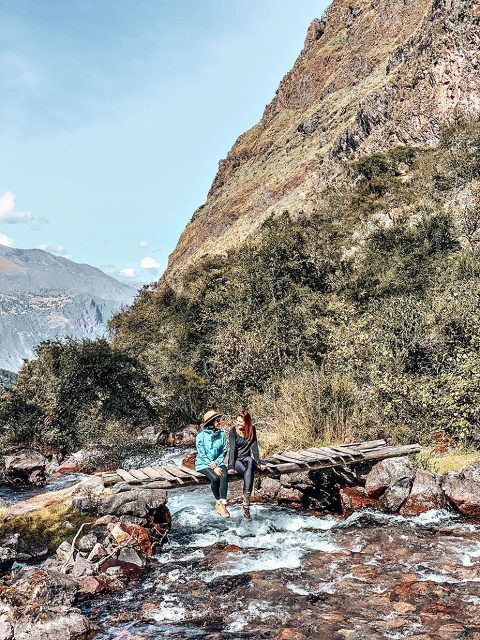

The classic Inca Trail is 42 kilometers (26 miles) long and takes four days to complete. But that single number tells only part of the story. Over thousands of hours guiding trekkers on this route, our team at machu-picchu.org has learned that raw distance means very little here — altitude, stone steps, and daily elevation gain are what actually shape the experience.
This guide gives you the full picture: exact daily distances, how terrain affects effort, and how the classic route compares to shorter alternatives. If you are planning your trek, read this before anything else.
The Classic 4-Day Inca Trail: Exact Daily Distances
The full route runs from Km 82 (Piscacucho) to Machu Picchu, covering 42 kilometers across four days. Here is the actual breakdown our guides use with every group:
| Day | Route | Distance | Key Challenge |
|---|---|---|---|
| Day 1 | Km 82 → Wayllabamba | ~12 km | Gentle warm-up, moderate incline |
| Day 2 | Wayllabamba → Pacaymayo | ~12 km | Dead Woman’s Pass (4,215 m) |
| Day 3 | Pacaymayo → Wiñay Wayna | ~16 km | Longest day, cloud forest, 3 ruin sites |
| Day 4 | Wiñay Wayna → Machu Picchu | ~2 km | Short, early morning, Sun Gate descent |

Day 3 is the longest in distance; Day 2 is the hardest in effort. Most hikers are surprised to learn that the final day into Machu Picchu covers only 2 kilometers — the real work is done long before you arrive.
Check: Inca Trail 4 Day Trek and Short Inca Trail 2 Days
Why 42 Kilometers Feels Like More
Hikers consistently report feeling like they walked farther than the official distance. That is not imagination. Three factors combine to make every kilometer on the Inca Trail more demanding than a standard trail:
Altitude. The highest point — Dead Woman’s Pass — reaches 4,215 meters above sea level. At that elevation, oxygen availability drops significantly. Your heart rate rises faster, your pace slows, and recovery takes longer. A kilometer at 4,000 meters feels very different from a kilometer at sea level.
Stone steps. The Inca Trail is not a dirt path. Large portions are paved with original Inca stonework: uneven, steep, and irregular. Thousands of stone steps accumulate across the four days, taxing the legs and knees far more than a natural surface would.
Elevation gain and loss. The trail does not simply climb and then descend. It rises and falls repeatedly across all four days, with a total cumulative elevation gain of approximately 1,200 meters. Your legs never get a sustained break.


The practical implication: arrive in Cusco at least two full days before the trek starts. Acclimatization is not optional — it is the single most effective preparation you can do.
The Short Inca Trail: 10–12 Kilometers in 1 or 2 Days
For travelers with limited time or a preference for a lighter physical challenge, the Short Inca Trail covers approximately 10 to 12 kilometers. It begins near Chachabamba or Km 104, passes through Wiñay Wayna — one of the most impressive terraced sites on the entire route — and arrives at Machu Picchu via the Sun Gate.
The short version retains the most scenic final section of the classic trail. You still pass original Inca stonework, cloud forest, and the iconic Sun Gate viewpoint. What it skips is the multi-day mountain experience and the highest passes.
This option suits first-time trekkers, travelers combining the trail with other Peru destinations, and anyone who wants to reach Machu Picchu on foot without the four-day commitment.
Alternative Treks vs. the Inca Trail: Distance Comparison
The Inca Trail is often confused with other routes to Machu Picchu. These are separate treks that do not follow the original Inca stone path:
- Salkantay Trek: 60–70 km over 4–5 days. Passes beneath the Salkantay glacier. No Inca archaeological sites along the route — the payoff is raw mountain scenery.
- Lares Trek: 33–45 km over 3–4 days. Focuses on high-altitude Andean communities and cultural encounters. Less archaeology, more immersion in traditional Quechua life.
- Inca Jungle Trek: ~50 km over 4 days. Combines cycling, trekking, and zip-lining. A good option for groups with mixed fitness levels.
None of these alternatives walk through the original stone-paved Inca Trail network or approach Machu Picchu via the Sun Gate in the same way. If the historic route itself matters to you, the classic or short Inca Trail is the only option.
How Long Does Each Day Take to Walk?
Pacing varies by group fitness, but here are realistic daily walking times based on our guided departures:
- Day 1: 4–5 hours of walking. Easy warm-up. Afternoon arrivals are common.
- Day 2: 6–8 hours. The ascent to Dead Woman’s Pass is slow for most people. Don’t underestimate this day.
- Day 3: 7–9 hours. The longest day. Multiple ruin sites (Runkurakay, Sayacmarca, Phuyupatamarca) add time but break up the effort.
- Day 4: 1.5–2 hours to the Sun Gate, then a short descent to Machu Picchu. Groups depart at 5:30 AM to reach the gate at sunrise.
Total walking time over the four days: approximately 20–24 hours. A reasonable daily pace is 2–3 km/hour on technical sections and 3–4 km/hour on easier terrain.
Who Should Choose Each Route
Classic 4-day trail (42 km): Best for hikers with moderate or better fitness who want the full archaeological experience. Requires training, especially if you are not regularly active. Age is not a barrier — we have guided trekkers in their 60s on this route — but preparation is non-negotiable.
Short trail (10–12 km): Best for travelers with limited time, families with older children, or anyone who wants the Sun Gate experience without the mountain passes. Also a strong choice if permits for the classic route are sold out.


Salkantay or alternatives: Best for hikers who missed the Inca Trail permit window or who prefer remote wilderness over archaeology.
Permits and What They Mean for Your Daily Distance
The Inca Trail operates under a strict daily permit quota — 500 total permits per day, of which only around 200 go to trekkers (the rest are for guides, porters, and staff). Permits sell out months in advance, particularly between May and September.
Permit assignment also determines which campsites your group uses, which affects the daily kilometer split. Not all operators use identical camping spots, so your Day 2 or Day 3 distance may vary slightly from another group’s. This is one reason hikers return with slightly different distance figures — the route has small variations in staging, not in total length.
Book permits well in advance. If you are planning for the dry season (April–October), permits for peak months often fill by January.
Check Inca Trail availability in real time.
Training for the Distance
Forty-two kilometers over four days is achievable for most people who prepare. The goal is not to become an elite runner — it is to give your legs, lungs, and knees enough conditioning that the trail does not overwhelm you.
Start training 6–8 weeks out. A practical routine:
- Long walks with elevation: 2–3 times per week, ideally on stairs or hills. Build to 3–4 hours of continuous walking by the final two weeks.
- Leg and core strength: Squats, lunges, and step-ups protect your knees on steep descents. Even two sessions per week makes a measurable difference.
- Cardiovascular base: Running, cycling, or swimming three times per week builds the endurance you need for long days at altitude.
Pack trekking poles. They are not a sign of weakness — every experienced high-altitude hiker uses them. Poles reduce knee impact on descents by up to 25% and help maintain rhythm on ascents.
Booking a Guided Trek with machu-picchu.org
As a licensed local operator (Traveleez) based in Cusco, we handle permit booking, daily logistics, and guiding for both the classic and short Inca Trail. Our guides are certified, bilingual, and have walked these 42 kilometers hundreds of times.
We offer small-group and private departures. All treks include permit processing, meals on trail, camping equipment, and professional guides who know every ruin, cloud forest, and stone step on the route.
Frequently Asked Questions
How long is the Inca Trail?
The classic route is 42 kilometers (26 miles), completed over 4 days. The short version covers 10–12 kilometers in 1–2 days.
What is the hardest day on the Inca Trail?
Day 2. The ascent to Dead Woman’s Pass (4,215 m) is steep and sustained, covering roughly 12 kilometers with significant elevation gain.
How many steps are on the Inca Trail?
There is no official count, but thousands of original Inca stone steps appear throughout the route — particularly on Days 2 and 3.
Is 42 kilometers hard?
Harder than it looks on paper. Altitude, stone steps, and cumulative elevation gain make it more demanding than a standard trail of the same length. Preparation is the key variable.
When does the trail close?
The trail closes every February for maintenance. No trekking occurs that month.
How far in advance should I book?
For May–September departures, book 4–6 months in advance. Permits sell out fast during peak season.
Can beginners do the classic trail?
Yes, with proper preparation. We regularly guide first-time trekkers. Acclimatizing in Cusco for two days before departure is essential.