 English
 Spanish
 Portuguese


Machu Picchu is a masterpiece of Inca engineering — a city of stone, light, and mystery carved into the high ridges of the Andes. Among its many remarkable structures, one stands out for its architectural perfection and spiritual depth: the temple of the sun in machu picchu.
This sacred building, also known as the Torreón or Temple of the Sun Tower, is one of the most iconic and significant sites within the citadel. It embodies the essence of the Inca worldview — a civilization that saw no division between science, religion, and nature.
In this article, we’ll explore the history, function, and symbolism of the Temple of the Sun. You’ll discover how it reflects the Incas’ astronomical knowledge, spiritual beliefs, and architectural genius, as well as its continuing legacy as one of the most fascinating places in Machu Picchu.
The Location and Structure of the Temple of the Sun

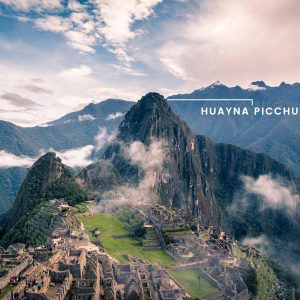
The temple of the sun in machu picchu occupies a prominent location in the upper sector of the citadel, near the Sacred Plaza and overlooking the Urubamba River valley. Built on top of a massive natural granite rock, it symbolizes the fusion between human craftsmanship and the living earth.
The temple’s most distinctive feature is its semi-circular wall, constructed with finely polished stones fitted so precisely that not even a blade of grass can pass between them. This curved design is unique within Machu Picchu and rare in other Inca sites, indicating the temple’s exceptional importance.
Inside the temple are two trapezoidal windows, carefully positioned to align with astronomical events such as the June solstice sunrise and the December solstice sunset. A large stone altar occupies the center, believed to have been used for ceremonies honoring the Sun God (Inti), the most important deity in the Inca pantheon.
Beneath the temple lies a small chamber carved directly into the rock, which archaeologists think served as a tomb or ceremonial crypt for high-ranking individuals. This integration of the upper sacred temple and lower chamber symbolizes the Andean concept of duality — heaven and earth, life and death.
Historical and Religious Significance
Understanding the temple of the sun in machu picchu means recognizing how deeply the Incas connected religion and nature. They saw the Sun (Inti) as the giver of life, warmth, and fertility. Its presence in the sky guided every agricultural cycle, inspired every ritual, and shaped each act of leadership.
The Temple of the Sun was likely a site for offerings and ceremonies dedicated to Inti. Priests, possibly accompanied by the Inca ruler himself, would have observed the sun’s movements through the temple windows to determine planting and harvest seasons.
The precision of these alignments shows the Incas’ mastery of solar observation. During the winter solstice (June 21), sunlight enters directly through the main window, illuminating the ceremonial stone — a moment that symbolized rebirth and cosmic balance.
In this way, the temple functioned as both a solar observatory and a spiritual sanctuary, blending science and religion in perfect harmony.
Connection to Pachamama and Andean Cosmology

While the Sun God was central, the temple of the sun in machu picchu also represents a deeper Andean belief: the worship of Pachamama, or Mother Earth. The temple’s foundation, carved into living rock, is a clear expression of respect toward nature and its divine essence.
For the Incas, everything — from mountains and rivers to animals and crops — possessed spirit and purpose. Machu Picchu itself was seen as a sacred landscape where every structure had a cosmic meaning. The Temple of the Sun stood as the link between the heavens above and the fertile earth below.
Ritual offerings likely included chicha (corn beer), coca leaves, and sometimes animal sacrifices, all intended to maintain balance between humans and the natural world. These rituals weren’t acts of superstition but of gratitude and reciprocity — a fundamental principle known as ayni, the mutual exchange between people and nature.
Thus, the temple symbolized the Incas’ understanding of existence as a cycle of giving and receiving, light and shadow, birth and renewal.
Architectural Mastery and Stonework
The architectural precision of the temple of the sun in machu picchu remains one of the most striking examples of Inca craftsmanship. The builders used no mortar, yet the stones fit seamlessly — a testament to both skill and reverence.
The semi-circular wall not only provides aesthetic beauty but also serves structural and symbolic purposes. Its curve amplifies sunlight and echoes the movement of the sun across the sky. The choice of location, atop a massive boulder, further emphasizes the union of human and natural creation.
Inside, the altar stone carved from the same rock beneath the temple is oriented to capture sunlight at specific moments of the year. Such deliberate alignment reveals the Incas’ deep knowledge of geometry, astronomy, and environmental adaptation.
Unlike modern construction focused on dominance over nature, the Incas designed their structures to exist with the landscape. The Temple of the Sun illustrates this philosophy perfectly — it’s not imposed upon the mountain; it’s part of it.
Discovery and Research
The temple of the sun in machu picchu was rediscovered in 1911 by American explorer Hiram Bingham, who led the Yale University expedition that brought Machu Picchu to global attention. Initially, Bingham referred to it as the “Temple of the Sun” because of its shape and orientation, comparing it to similar structures in Cusco such as the Coricancha (Temple of the Sun in the capital).
Subsequent studies confirmed that the building indeed served astronomical and religious functions. Archaeologists like Luis Lumbreras, Jean-Pierre Protzen, and Mariana Mould de Pease have all analyzed its construction techniques, symbolic design, and cultural meaning.
Excavations around the temple revealed fine pottery, ceremonial tools, and remains of offerings — evidence of ritual activity. Beneath the main platform, the crypt-like chamber contained bones believed to belong to high-status individuals, perhaps priests or nobles associated with sun worship.
Ongoing research continues to uncover new insights into the temple’s purpose. Advances in 3D mapping and solar simulation have confirmed the extraordinary accuracy of its alignments — proof of the Incas’ advanced understanding of astronomy centuries before modern instruments existed.
The Temple of the Sun and the Royal Residence
The temple of the sun in machu picchu is directly connected to a complex known as the Royal Residence or the House of the High Priest. A narrow stone staircase links the two structures, suggesting that only elite members of Inca society had access to the temple.
This exclusivity reflects the hierarchical nature of Inca religion. While the general population participated in public ceremonies in open plazas, the Temple of the Sun was reserved for private rituals conducted by priests and the Sapa Inca — the emperor considered a direct descendant of the Sun.
This spatial relationship between the temple and the royal compound reinforces Machu Picchu’s identity as a sacred retreat rather than a military or administrative center. It was a place for renewal, meditation, and communion with the gods — a sanctuary above the world.
Solar Rituals and Astronomical Observations
The temple of the sun in machu picchu was not merely a sacred site — it was also a sophisticated astronomical observatory.
The Incas observed the movements of the sun, moon, and stars to regulate agricultural cycles and ceremonial calendars, ensuring harmony between human life and the cosmos.
Each year, the June solstice held immense significance. On this day, sunlight entered through the temple’s main window and illuminated the central altar stone. This precise moment marked the shortest day of the year — the return of the sun — symbolizing renewal and divine blessing for the coming agricultural season.
During the December solstice, sunlight aligned with the secondary window, signaling the time to harvest and give thanks to Inti.
These alignments were not coincidental; they demonstrated the Incas’ deep understanding of geometry, solar movement, and sacred geography.
Priests and astronomers likely gathered inside the temple to perform rituals, burn offerings, and observe the light patterns across the walls.
For them, architecture was not static — it was alive, responding to the breath of the universe.
Even today, visitors standing inside the temple during solstice celebrations can feel that timeless connection between sunlight, stone, and spirit.
Relationship with Other Sun Temples in the Inca Empire


The temple of the sun in machu picchu was part of a larger network of sun temples spread across the Inca Empire (Tawantinsuyo).
The most famous of these was the Coricancha in Cusco — the empire’s main religious center dedicated to Inti.
Like Coricancha, the Temple of the Sun at Machu Picchu shares common features: precise stonework, astronomical orientation, and association with royal or priestly residences.
However, its location on a mountaintop gives it a unique dimension — a sanctuary in the sky, closer to the gods.
Other related temples, such as those in Pisac, Ollantaytambo, and Vilcashuamán, also reflected solar worship through their design. Each served as a node in a cosmic network that unified the empire under the light of the sun.
This interconnected system shows how the Incas viewed their territory not merely as land, but as a sacred organism.
Every temple, mountain, and river formed part of a divine landscape that reflected the balance of the cosmos.
Machu Picchu’s temple, however, remains the most enigmatic — not only because of its beauty, but because it survived untouched by the Spanish conquest. It offers an unbroken glimpse into the Incas’ original vision of their world.
Symbolism of Light and Shadow
A crucial aspect of the temple of the sun in machu picchu is the way it manipulates light and shadow.
To the Inca, light was a sacred element — the physical manifestation of divine energy.
As sunlight entered through the temple’s windows, it created patterns that shifted throughout the year. These were not random; they symbolized the eternal rhythm of creation and renewal.
The contrast between illuminated and shaded areas represented duality — life and death, order and chaos, the seen and the unseen.
The temple thus became a stage where cosmic forces performed their eternal dance.
It was not a dark, enclosed space like cathedrals in Europe but an open, breathing sanctuary where light itself was the priest.
This symbolic use of light made the Temple of the Sun both a spiritual and scientific monument. It unified the physical and metaphysical, showing that for the Incas, understanding the universe meant living in harmony with it.
Discovery of the Royal Tomb Beneath the Temple
Beneath the temple of the sun in machu picchu, archaeologists discovered a small cave-like chamber carved into the natural rock.
This subterranean space, often called the “Royal Tomb,” adds another layer of mystery and meaning to the site.
The chamber features fine stonework, niches, and carved steps, suggesting it was used for ceremonial or funerary purposes.
Although no complete mummies were found, archaeologists unearthed fragments of bones and objects such as pottery and jewelry — evidence of high-status burials.
The connection between the temple above and the tomb below illustrates a fundamental Andean belief: the unity of the Hanan Pacha (upper world) and the Ukhu Pacha (underworld).
In other words, the Temple of the Sun symbolized life, while the chamber beneath represented death — both in perfect harmony.
This vertical symbolism is one of the most profound aspects of Machu Picchu’s design, reflecting an entire philosophy of existence encoded in stone.
Engineering Genius, How the Temple Withstood Time
One of the most fascinating things about the temple of the sun in machu picchu is how it has survived centuries of earthquakes, rains, and erosion almost intact.
The secret lies in the Incas’ unparalleled engineering knowledge.
The temple’s stones were cut with incredible precision and slightly inclined inward, a design that absorbs seismic vibrations.
The absence of mortar allows the blocks to “breathe” — they move subtly during tremors but always settle back into place.
Drainage systems carved into the rock prevent water accumulation during heavy Andean rains. The foundation, anchored into the mountain itself, ensures absolute stability.
This combination of flexibility and strength is why Inca architecture remains so admired today.
Modern engineers continue to study these techniques to understand how such structures could be built without modern tools or technology.
The temple’s resilience is more than technical — it’s symbolic. It stands as proof of the Inca principle of harmony with nature: build according to the mountain, not against it.
The Temple of the Sun and the Women of the Sun
Historical accounts mention that in Inca society, certain women known as Acllas — “Virgins of the Sun” — were chosen to serve the god Inti.
These women lived in seclusion, dedicating their lives to prayer, ritual, and the creation of fine textiles used in ceremonies.
The temple of the sun in machu picchu may have been one of the sacred spaces where these women participated in solstice rituals.
Some archaeologists speculate that the terraces and small chambers nearby were used by priestesses preparing offerings and observing celestial events.
While evidence remains inconclusive, this interpretation enriches our understanding of the site as a place where both men and women played active roles in spiritual life.
It also highlights the inclusivity of Andean religion, where balance — not hierarchy — defined the sacred.
Visiting the Temple of the Sun Today
For modern travelers, visiting the temple of the sun in machu picchu is one of the most rewarding parts of the site.
However, access is limited to protect its fragile structure. Visitors can view it from designated areas along the guided circuit, particularly from the upper terraces or during Circuit 1 or 2 routes.
The best time to observe the temple is in the early morning, when sunlight enters at a low angle and highlights the smooth curvature of the wall.
During the June solstice, the temple becomes even more magical — the first rays of the sun illuminate it just as they did centuries ago.
Photography enthusiasts will find endless inspiration here. The contrast between light and shadow, the play of mist, and the backdrop of surrounding mountains make it one of the most photogenic places in the world.
While direct entry inside the temple is no longer allowed, standing before it still evokes a deep sense of reverence.
It’s one of those rare moments where history feels alive — where you can almost sense the presence of the priests, the chants, and the glow of the sacred fire that once burned within.
Recent Archaeological Discoveries
The temple of the sun in machu picchu continues to reveal new secrets through modern research.
Recent studies using 3D laser scanning and photogrammetry have provided unprecedented insight into its construction, alignment, and hidden chambers.
Archaeologists from the Peruvian Ministry of Culture have identified micro-fissures in the stones that show how the builders shaped each block to fit naturally with the rock beneath. These details confirm that the Incas didn’t impose their architecture upon the mountain — they collaborated with it.
Additionally, ground-penetrating radar has detected anomalies beneath the temple, suggesting possible undiscovered cavities or storage chambers. These could hold ritual artifacts, though excavation is restricted to preserve the sanctity of the site.
One of the most exciting findings is that the temple’s windows align not only with the solstices but also with the heliacal rising of the Pleiades — a star cluster vital to Inca agricultural calendars. This confirms the temple’s dual role as both a solar and stellar observatory, reinforcing its cosmic importance.
Each new discovery underscores what many already believe: the Temple of the Sun is not just a monument — it’s a living encyclopedia of Andean science and spirituality.
Cosmic Symbolism and the Inca Universe
To truly grasp the significance of the temple of the sun in machu picchu, one must understand the Inca concept of the universe.
The Incas believed in a tripartite cosmos:
- Hanan Pacha – the upper world of gods, stars, and celestial beings.
- Kay Pacha – the earthly world of humans, animals, and daily life.
- Ukhu Pacha – the inner world of ancestors and the dead.
The Temple of the Sun connects these three realms through its vertical structure — the sanctuary above and the crypt below. Sunlight descending through its windows symbolized divine energy descending into the human realm, while the chamber beneath represented the ancestral world returning life to the soil.
This cyclical flow between sky and earth embodies the Andean principle of reciprocity, where all things — living and divine — exchange energy to maintain harmony.
When visitors stand before the temple today, they are not just observing a ruin; they’re standing at the intersection of worlds, where cosmic forces once converged through light, stone, and ritual.
Integration with the City’s Sacred Geometry

The temple of the sun in machu picchu is not an isolated structure. It forms part of a carefully planned urban and spiritual design that reflects the city’s alignment with the mountains and the stars.
Archaeologists and astronomers have discovered that Machu Picchu was built according to a sacred grid, aligning major temples and plazas with celestial and terrestrial landmarks.
For instance, lines drawn from the Temple of the Sun intersect with the Intihuatana Stone (the ritual “hitching post of the sun”) and the Sacred Plaza, forming a geometric triangle of power.
Each of these points corresponded to specific astronomical events, ensuring that the entire citadel functioned as a cosmic observatory.
From this perspective, the Temple of the Sun was not just one monument among many — it was the heart of a living mandala carved into the mountain.
This precision also illustrates the Incas’ belief in sacred geography. They saw their cities as microcosms of the universe, mirroring the harmony of nature. The builders of Machu Picchu didn’t just create architecture; they shaped a celestial instrument tuned to the rhythm of the Earth.
The Temple and the Concept of Duality
Duality was a cornerstone of Inca philosophy — everything existed in pairs: sun and moon, male and female, day and night, order and chaos.
The temple of the sun in machu picchu embodies this principle in both its form and symbolism.
Its curved wall represents the feminine aspect — soft, embracing, and nurturing — while the solid rock base beneath symbolizes the masculine — strong, stable, and eternal.
Together, they form a sacred union between Inti (the Sun God) and Pachamama (Mother Earth).
The interaction of sunlight with stone during solstices can be seen as a cosmic expression of this union — the sun “touching” the earth, giving it life and warmth.
Such symbolism permeates all Inca art and architecture, showing that their spirituality was not abstract but deeply rooted in the cycles of nature.
Visitors today often sense this harmony intuitively — even without knowing the details, the temple radiates balance and peace.
A Sanctuary of Silence and Reflection
Beyond its historical and scientific importance, the temple of the sun in machu picchu holds an emotional resonance that transcends time.
The moment you stand near its walls, surrounded by mist and the soft hum of the Andes, the atmosphere feels sacred.
Unlike modern religious buildings filled with decoration, the temple’s power comes from its simplicity. Every stone, curve, and shadow contributes to an overwhelming sense of serenity.
The design encourages contemplation — the curved wall draws your gaze outward toward the mountains, while the soft light inside invites inward reflection.
Many travelers describe visiting the temple as a spiritual experience rather than a historical one. They feel connected to something ancient yet timeless, as if the same energy that moved the Incas still lingers in the air.
This blend of silence, symmetry, and symbolism makes the Temple of the Sun one of the most emotionally moving places in all of Machu Picchu.
The Temple’s Role in Festivals and Ceremonies
During Inca times, the temple of the sun in machu picchu likely hosted major religious festivals linked to the solar calendar.
The most important of these was Inti Raymi, the Festival of the Sun, celebrated every June 21.
At dawn, priests and nobles would gather to greet the sunrise with chants, offerings, and the burning of sacred llama fat.
The first ray of sunlight entering the temple symbolized divine blessing, renewing the bond between the people and the god Inti.
Other ceremonies throughout the year marked planting and harvest seasons, lunar cycles, and celestial alignments.
Such events reinforced the community’s relationship with the cosmos — a cycle of gratitude, worship, and reciprocity that sustained both nature and society.
Though the rituals ended centuries ago, the spirit of these celebrations remains. Every year, thousands of visitors arrive during the solstice to witness the same sunrise, honoring the legacy of those who once watched from the same sacred stones.
Machu Picchu’s Sacred Network

Within the broader context of the citadel, the temple of the sun in machu picchu functioned as the nucleus of a spiritual network connecting various sacred points.
- The Intihuatana Stone represented the harnessing of solar power — a ritual link between humans and the cosmos.
- The Sacred Plaza was the stage for collective ceremonies and processions.
- The Temple of the Condor symbolized the spirit’s freedom and communication with the divine.
Together, these monuments formed a ritual landscape — a choreography of light, geometry, and devotion.
The Temple of the Sun was the heart of this design, orchestrating the balance between all the other structures.
This holistic vision of urban design reveals the Incas’ unparalleled ability to blend art, science, and spirituality into a single harmonious experience.
Legacy of the Temple of the Sun
The temple of the sun in machu picchu stands today as a timeless symbol of harmony between human ingenuity and the forces of nature.
It represents the very essence of Inca civilization — a culture that built not to dominate the world but to live in balance with it.
For the Incas, the temple was more than a physical space; it was a living bridge between the heavens and the earth, between light and life.
Centuries later, that connection still feels tangible. The precision of its construction and the perfection of its alignment remind us that the ancients understood something profound — that humanity thrives when it moves with nature, not against it.
Every visitor who gazes upon this temple, whether scholar or traveler, becomes part of its story. Its stones whisper lessons about patience, respect, and the eternal dance between the sun and the mountain.
Modern Significance and Global Recognition
In the modern era, the temple of the sun in machu picchu has become one of the most studied and admired monuments in the world.
It draws archaeologists, historians, photographers, and spiritual seekers from across the globe — all searching for meaning within its curves and shadows.
UNESCO’s recognition of Machu Picchu as a World Heritage Site in 1983 helped secure international protection for this sacred space.
Ongoing conservation efforts by the Peruvian government ensure that the temple remains preserved despite the heavy flow of visitors.
Beyond its physical preservation, the temple’s significance now extends into the collective imagination. It serves as a reminder of humanity’s shared heritage — a message of reverence for the planet and for the mysteries that unite all cultures.
Each sunrise over its stones is not just an event; it’s a ceremony repeated endlessly, linking past and present in one golden moment.
The Spiritual Experience of Visiting the Temple
For travelers, standing near the temple of the sun in machu picchu is often an emotional and spiritual experience.
The air feels charged with quiet energy, the light gentle but powerful. Every angle of the temple seems to invite reflection — on time, on balance, on what it means to exist within something greater.
Visitors frequently describe feeling peace and clarity while looking through the temple’s windows toward the horizon.
It’s as if the design itself guides awareness — from the mountain peaks above to the sacred valley below, uniting the inner and outer worlds.
Those seeking more than a photo opportunity often spend a few silent minutes here, allowing the stillness to speak.
It’s an act of modern pilgrimage — not to worship, but to listen.
And that is perhaps the greatest gift the temple continues to offer: a space where the noise of the world fades, and the light of understanding quietly returns.
Responsible Tourism and Preservation
To ensure the temple of the sun in machu picchu endures for future generations, responsible tourism is essential.
Visitors are encouraged to follow established paths, avoid touching the stones, and respect restricted zones.
Guides certified by the Ministry of Culture provide invaluable context, helping travelers appreciate the site beyond its surface beauty.
Small acts — like carrying reusable water bottles, avoiding plastic waste, and maintaining silence in sacred areas — all contribute to protecting this world wonder.
By approaching Machu Picchu with mindfulness, travelers become guardians of its legacy.
Each respectful visit helps preserve the harmony that has defined this place for more than 500 years.
The Incas built the temple to honor life and nature. In our time, visiting responsibly is the way we honor them back.
Discover Machu Picchu with Us
Your journey to Machu Picchu isn’t just about seeing a monument — it’s about experiencing a masterpiece of spirit and design.
Standing before the temple of the sun in machu picchu, you’ll understand why this sanctuary continues to inspire wonder across centuries.
Our local expert guides will lead you through its secrets — from the celestial alignments to the stories etched into every stone.
Experience the light, the silence, and the mystery that have made this temple one of the world’s most sacred spaces.
Discover Machu Picchu with us — where every sunrise tells a story of faith, wisdom, and the eternal dialogue between the sun and the earth.
Follow our journeys and daily inspiration on Instagram:
@machupicchu.mp
Share your moments and tag us — your experience could inspire others to explore this wonder with the same respect and awe.
Conclusion, The Living Heart of Machu Picchu
The temple of the sun in machu picchu remains the living heart of the Inca sanctuary — a place where light, stone, and spirit meet.
It embodies the sophistication of an empire that mastered the art of harmony, proving that progress and reverence can coexist.
From its curved walls to its perfectly aligned windows, the temple reflects the timeless rhythm of the cosmos — a rhythm that continues to guide and inspire humanity.
As the sun rises and its rays strike the ancient altar, the message of the Incas endures:
Honor the earth, follow the light, and live in balance with all that surrounds you.
Visiting this temple isn’t just witnessing history — it’s stepping into it. And once you do, a part of that golden light will always remain within you.